
Stucco Repair Bergen County NJ: The 2026 Homeowner’s Guide to Exterior Restoration
That hairline crack on your exterior wall isn’t just a cosmetic flaw. It’s a potential entry point for moisture that can compromise your home’s entire structural frame. For homeowners seeking stucco repair Bergen County NJ, the challenge isn’t just fixing the surface; it’s addressing the underlying moisture management system. You likely worry that a simple patch might be masking hidden mold or rot, especially given North Jersey’s aggressive freeze-thaw cycles. It’s a valid concern because a house is only as strong as its exterior envelope.
We’ve designed this guide to help you identify the specific needs of your property, whether you have traditional hardcoat stucco or a synthetic EIFS system. You’ll learn how to accurately assess damage severity and understand the professional restoration process required under the 2026 New Jersey Home Improvement and Home Elevation Contractor Licensing Act. We’ll preview the steps needed to protect your investment and show you how to find a reliable local expert who prioritizes structural integrity and methodical execution over quick, temporary fixes.
Key Takeaways
- Learn to distinguish between minor cosmetic hairline cracks and structural diagonal fissures that signal deeper structural issues.
- Understand how New Jersey’s freeze-thaw cycles and high humidity necessitate specialized stucco repair Bergen County NJ to prevent systemic rot.
- Determine whether your home requires localized repairs for specific damage or full-scale remediation to fix systemic installation failures.
- Discover why a professional structural assessment must look behind the surface to protect your property’s long-term value.
- See how a methodical restoration process and clean job site policy ensure your exterior remains durable and structurally sound.
Identifying Common Stucco Issues in North Jersey Homes
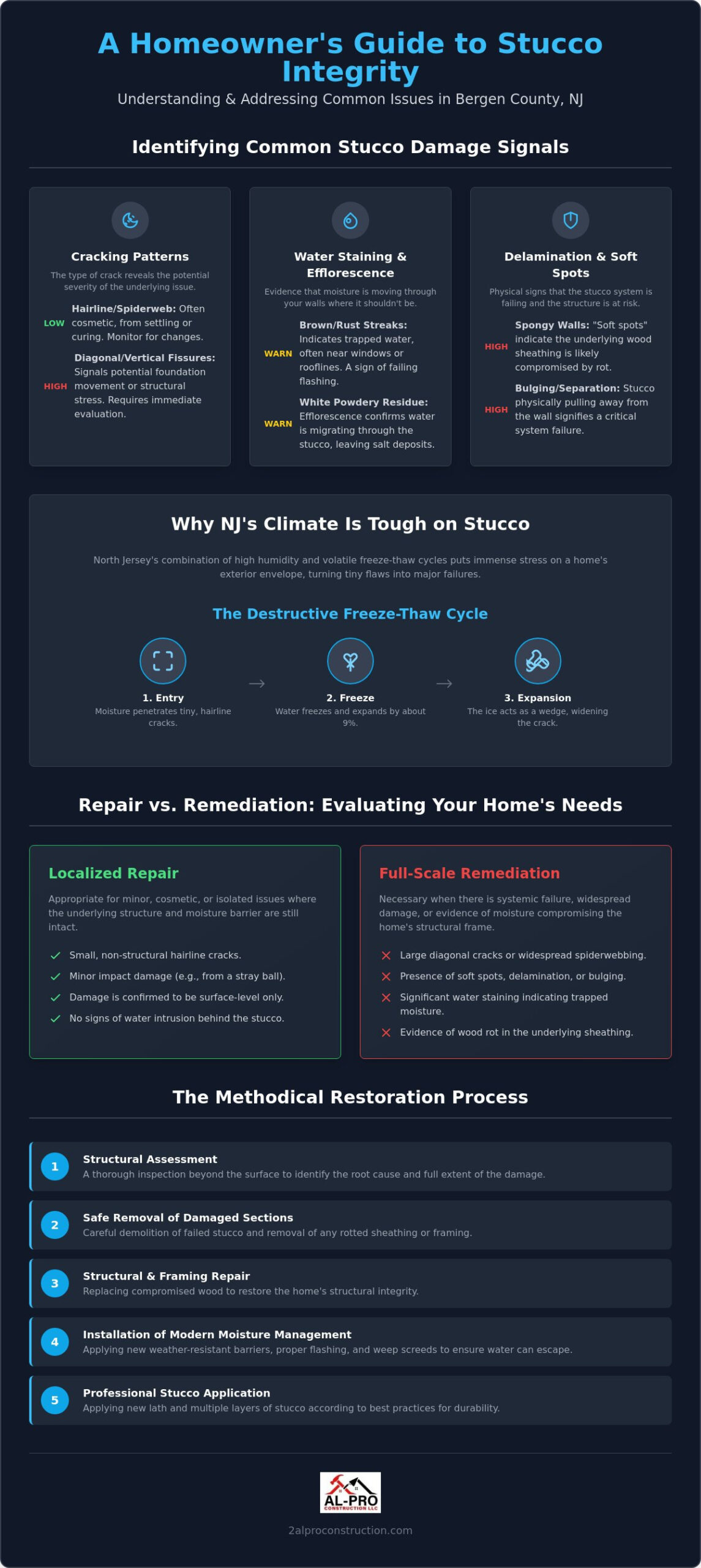
Stucco provides a durable, fire-resistant finish for your home, but it’s often misunderstood as a simple layer of cement. To understand the material’s composition and history, it helps to first ask, What is Stucco? In our local climate, it’s a complex protective barrier that must withstand intense environmental pressure. Identifying early signs of failure is the most effective way to avoid a full-scale structural emergency. Many homeowners overlook small changes, but spotting delamination, where the stucco physically separates from the metal wire lath, is a critical first step in determining the need for stucco repair Bergen County NJ.
Look specifically for brownish, rust-colored streaks appearing under window corners or where the roof line meets the wall. These “tears” aren’t just aesthetic marks. They indicate that water is trapped behind the finish. This trapped moisture often leads to wood rot in the underlying sheathing, which remains hidden from view until the damage becomes extensive and costly to remediate.
Cracking Patterns and What They Signal
Not all cracks require the same level of intervention. Hairline cracks, often less than 1/16 of an inch wide, might result from minor seasonal settling or a slightly dry mix during the initial application. Spiderweb cracking usually points to “map cracking,” which suggests the material cured too quickly or was applied too thin. However, vertical and diagonal fissures are more concerning. If you notice wide diagonal cracks near the corners of your home in Oakland or Ridgewood, it often signals foundation movement or structural stress that requires immediate professional evaluation.
Water Staining and Efflorescence
White, powdery residue on your walls is known as efflorescence. This happens when moisture migrates through the material and leaves salt deposits on the surface. While the powder itself is harmless, its presence confirms that water is moving through your walls in ways it shouldn’t. You should also check for “soft spots” by applying light pressure to areas with visible staining. If the wall feels spongy or has any “give,” the internal wood structure is likely compromised. Addressing these issues through professional stucco repair Bergen County NJ ensures that moisture doesn’t turn a localized problem into a total system failure. We focus on looking behind the wall to ensure your home remains safe and dry.
Why NJ Winters Are Tough on Stucco: The Science of Damage
NJ weather is relentless. Our winters aren’t just cold; they’re volatile. The freeze-thaw cycle is the process where trapped moisture expands as it freezes, widening stucco cracks and pushing the material away from the substrate. In Bergen County, temperatures often hover near the freezing point, causing multiple cycles in a single week. This constant expansion and contraction puts immense pressure on your home’s exterior shell, making stucco repair Bergen County NJ a necessity for maintaining structural integrity.
North Jersey’s high humidity levels further complicate the issue by contributing to ‘trapped’ moisture. When the air is saturated, damp stucco cannot dry out effectively between storms. Driving rain and heavy snow hit our homes with significant force. If flashing around windows or rooflines is improper, water is funneled directly behind the stucco finish rather than being diverted away from the house. This creates a hidden damp environment where rot can thrive unnoticed for years.
The Freeze-Thaw Cycle Explained
Micro-cracks that seem harmless in October often become major gaps by April. Salt and de-icing chemicals used on driveways and walkways can also corrode the metal lath if the stucco is porous or cracked near the ground level. Thermal expansion of stucco materials occurs as they respond to the rapid temperature swings common in NJ, creating physical stress on the bond between layers. Following Stucco Restoration Best Practices ensures these environmental stressors are managed through proper material selection and application techniques.
Drainage Planes and Moisture Management
Traditional hardcoat stucco is rigid and porous, while EIFS (synthetic stucco) acts like a plastic wrap that can trap water if the system isn’t vented correctly. The ‘weep screed’ is a critical component in modern NJ building codes. It is a perforated metal or plastic strip at the base of the wall that allows moisture to escape the drainage plane. Many older homes in Hackensack and Teaneck lack these necessary moisture barriers, which leads to rotting sill plates and compromised framing over time.
Current climate trends in 2026 show more frequent heavy precipitation events in the Northeast. This requires more robust drainage planes than what was considered standard twenty years ago. If you suspect your home’s drainage system is failing, a professional exterior inspection can identify these hidden risks before they require a full teardown. This proactive approach is the core of effective stucco repair Bergen County NJ, focusing on the physical reality of the wall rather than just the surface appearance.
Stucco Repair vs. Remediation: Evaluating Your Home’s Needs
Determining whether your property requires a simple patch or a complete overhaul is the most significant decision you’ll face regarding stucco repair Bergen County NJ. We define “repair” as a targeted fix for localized issues, such as filling a single crack or patching a small hole caused by physical impact. Repair is appropriate when the rest of the system is functioning correctly. “Remediation” is different. It involves addressing a systemic failure of the entire installation, which often means removing the stucco to fix the underlying drainage and flashing systems that were installed incorrectly from the start.
Choosing a cheap patch for a systemic problem often leads to a more expensive rot repair later. If moisture is already trapped behind your walls because of a missing drainage plane, adding a new layer of stucco over the top only seals that water inside. This accelerates wood rot and mold growth. In situations where the stucco system is fundamentally compromised, we may recommend a transition to siding installation Bergen County NJ. This provides a fresh start with a more predictable moisture management profile for your home’s exterior.
When is a Patch Sufficient?
A patch is usually sufficient when the damage is limited to less than 10% of the total wall surface and is clearly localized. If a stray rock or a fallen branch caused a dent, a professional can often match the existing texture and color for a seamless look. The challenge lies in the application; the new material must bond correctly with the old to prevent a cold joint. We ensure every patch is integrated with the existing water-resistive barrier so it doesn’t become a new point of entry for rain.
Signs You Need Full Remediation
Systemic failure requires a different level of expertise. You likely need full remediation if you notice widespread mold growth or musty odors inside your home, as these are clear indicators of moisture in the wall cavity. Significant wood rot discovered behind the lath during a minor inspection is another red flag. If your home lacks a weep screed or has missing flashing across the entire property, localized stucco repair Bergen County NJ won’t solve the problem. These are structural flaws that demand a comprehensive solution to protect your home’s integrity and your family’s health.
The Professional Stucco Repair Process: What to Expect
Al-Pro Construction LLC takes a methodical approach to every project. We start with a thorough structural assessment to identify the root cause of failure. It’s useless to apply new material over a rotting frame. Once the assessment is complete, we focus on property protection. Stucco work is inherently messy, but our clean job site policy ensures your windows, landscaping, and walkways are shielded from debris throughout the process. This level of preparation is what separates a professional restoration from a standard patch job.
A disciplined three-coat system is the standard for high-quality stucco repair Bergen County NJ. First, the scratch coat provides a mechanical bond to the wire lath. Second, the brown coat levels the surface and adds structural strength. Finally, the finish coat provides the color and texture. We conclude with professional sealing and waterproofing to ensure the new installation withstands the driving rain and snow common in our region. This multi-step process ensures the repair remains durable for years to come.
Phase 1: Discovery and Demolition
We begin by removing all compromised material. This isn’t a random process; we must find the “healthy” edge where the existing stucco is still securely bonded to the substrate. Once the lath is exposed, we inspect the underlying sheathing and house wrap for signs of water damage. If we find rot, we repair the structural components and the moisture barrier before any new cement is applied. This ensures the repair is a permanent fix rather than a cosmetic mask for hidden damage.
Phase 2: Application and Curing
Curing is a science, not a race. Humidity levels in North Jersey dictate our schedule. If the material dries too fast, it will crack; if it stays too wet, it won’t bond correctly. We monitor local weather conditions to ensure each coat cures properly before the next layer is added. Texture matching is where our 15+ years of experience becomes evident. We meticulously replicate the patterns found on older Bergen County homes so the repair disappears into the original facade. We finish with a vapor-permeable coating that allows the wall to “breathe” while blocking liquid water entry.
If you’re ready to restore your home’s exterior with a team that values precision and structural durability, you can schedule a professional stucco assessment today to start your project with confidence.
Reliable Stucco and Exterior Restoration with Al-Pro Construction
Al-Pro Construction LLC brings over 15 years of local North Jersey experience to every project. We understand that stucco repair Bergen County NJ is rarely an isolated task. Often, exterior failure is linked to chimney leaks or foundation settling. As a comprehensive masonry contractor Bergen County NJ, we can address these interconnected issues simultaneously. This integrated approach ensures that your home’s exterior is not just patched but fully restored to a professional standard that emphasizes structural durability.
Our commitment to transparent project management means you’ll always know the status of your restoration. We maintain a clean job site policy because we respect your property and your time. From Oakland to Hackensack, we provide durable solutions that prioritize long-term value over temporary fixes. We don’t just apply a finish; we manage a complete moisture protection system. Our team handles the physical reality of construction with the precision of master craftsmen.
The General Contractor Advantage
Hiring a licensed general contractor offers a distinct advantage over hiring a specialized plastering crew. If we discover structural rot behind your siding or stucco, we have the expertise to repair the framing immediately. We manage all local permits and inspections required by Bergen County municipalities, ensuring your project remains compliant with the 2026 licensing laws. This expertise is particularly valuable when we coordinate stucco work with larger projects like second story additions, where maintaining a consistent exterior envelope is critical for the home’s integrity.
Scheduling Your 2026 Exterior Assessment
The best time for stucco repair Bergen County NJ is during the moderate temperatures of spring or early autumn. These seasons provide the ideal environment for the cementitious layers to cure without the risk of freezing or excessive heat. Our detailed estimates provide a clear breakdown of the physical work involved. We include the removal of damaged material, structural inspections, and the application of the final waterproofing system. We don’t believe in hidden fees; we believe in predictable, high-quality results that give you peace of mind.
If you’ve noticed cracks, stains, or soft spots on your exterior, taking action now prevents more costly structural repairs later. You can Request a professional stucco assessment from Al-Pro Construction to secure your home’s future and restore your property’s structural health.
Protecting Your Home’s Long-Term Structural Integrity
Your home’s exterior is its first line of defense against the unpredictable North Jersey climate. Addressing small cracks and discoloration today ensures that minor maintenance doesn’t escalate into a structural emergency. By choosing a methodical approach to stucco repair Bergen County NJ, you protect both your property’s value and its internal safety. It’s about looking beyond the surface to ensure the drainage systems and moisture barriers are functioning as intended. A well-executed restoration project provides the peace of mind that comes from knowing your house is truly secure.
Al-Pro Construction LLC brings 15+ years of Bergen County experience to every project. As a licensed and insured NJ contractor, we emphasize structural durability and methodical execution. Our clean job site guarantee means we respect your property as much as we respect the craft of restoration. You don’t have to manage these exterior challenges alone. Secure your home’s exterior with expert stucco repair from Al-Pro Construction and ensure your property remains sound for years to come.
Frequently Asked Questions
How much does stucco repair cost in Bergen County NJ?
Costs for restoration vary significantly based on the depth of the damage and the type of stucco system on your home. Cosmetic repairs for minor surface cracks are less intensive than structural remediation that requires addressing moisture behind the lath. We recommend a physical assessment to determine if your issues are localized or systemic. Addressing moisture problems early prevents the need for a full system replacement, which is a much larger investment.
Can I paint over cracked stucco to seal it?
Painting over cracks is a temporary cosmetic fix that often traps moisture inside the wall cavity. Standard house paint isn’t a structural sealant. If water is already present behind the finish, a layer of paint prevents it from evaporating, which accelerates wood rot. Proper stucco repair Bergen County NJ involves cleaning the fissure and applying a professional-grade patch or an elastomeric coating that allows the wall to breathe while blocking liquid water.
How long does a typical stucco repair project take?
A standard repair project usually takes between three and seven days to complete. This timeline depends on the number of coats required and the local humidity levels during the curing process. Each layer, including the scratch and brown coats, needs sufficient time to set before the next application. We monitor North Jersey weather conditions closely to ensure the material bonds correctly, providing a durable finish that withstands seasonal changes.
Is EIFS different from traditional hardcoat stucco for repairs?
Yes, Exterior Insulation and Finish Systems (EIFS) are synthetic and require different repair techniques than traditional cement-based stucco. Traditional hardcoat is a rigid, three-coat cement system applied over a metal lath. EIFS is a multi-layered finish that includes foam insulation. Because EIFS can trap water if the drainage plane is faulty, repairs must focus heavily on moisture management and specialized sealants to prevent internal framing damage.
Why is my stucco cracking around the windows?
Cracks around windows typically occur due to structural stress or thermal expansion at the corners of the frame. Windows are natural weak points in the wall’s exterior shell. If the flashing was installed incorrectly, moisture can seep in and cause the underlying wood to swell, pushing against the stucco. This pressure creates diagonal fissures. Identifying these issues early is a core part of stucco repair Bergen County NJ to avoid extensive window-frame rot.
Will homeowners insurance cover the cost of stucco repair?
Most homeowners insurance policies don’t cover stucco repairs caused by general wear and tear or long-term maintenance issues. Coverage is typically reserved for sudden, accidental damage, such as impact from a storm or a fallen tree. If the damage results from gradual water intrusion or improper installation, the homeowner is usually responsible for the costs. It’s best to review your specific policy and document any sudden damage immediately.
How do I find a reliable stucco contractor in North Jersey?
You should verify that the contractor holds a valid 2026 New Jersey Home Improvement Contractor license and carries at least $500,000 in general liability insurance. Look for a team with at least 15 years of local experience who understands the specific environmental demands of the Bergen County climate. A reliable professional will provide a detailed written contract for any project over $500 and will emphasize structural integrity over quick aesthetic fixes.
Can stucco be repaired in the winter months in NJ?
Stucco repair is generally not recommended during the winter when temperatures drop below 40 degrees Fahrenheit. The cementitious material requires specific temperature ranges to cure properly without losing its structural strength. If the wet stucco freezes before it sets, it will likely crumble or peel. We typically schedule stucco repair Bergen County NJ for the spring, summer, or early autumn to ensure the material bonds securely and provides a long-term solution.


