
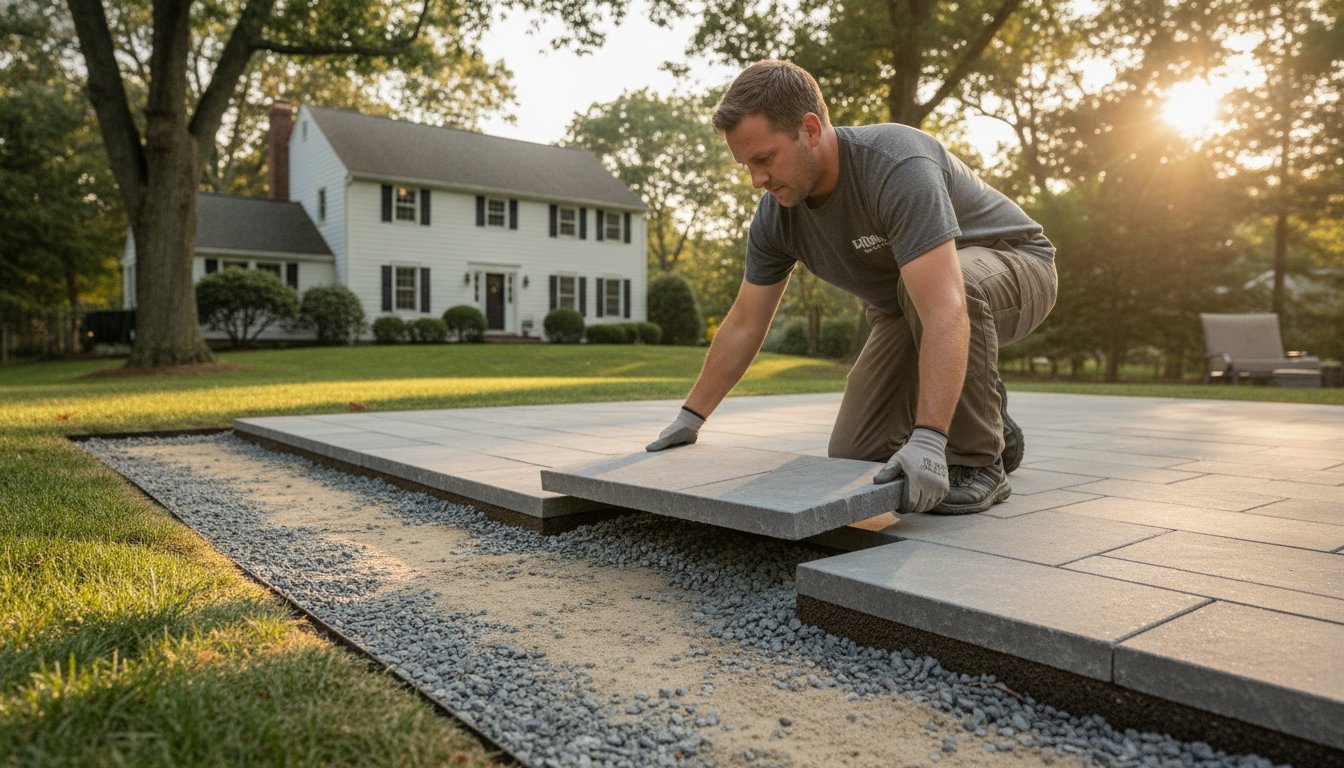

Paver Patio Installation in Bergen County: The Complete 2026 Homeowner’s Guide
The most expensive stones in the world won’t save your backyard if the foundation beneath them is shallow or poorly drained. In North Jersey, where freeze-thaw cycles and heavy rain are the norm, a high-quality paver patio installation Bergen County homeowners can rely on depends entirely on what’s buried underground, not the patterns on top. You likely want a beautiful space for entertaining, but the fear of contractors doing a cheap, shallow job that shifts within two seasons is a valid concern for any property owner.
We understand that you’re looking for more than just a quick cosmetic fix; you want a stable, flat surface that protects your home foundation by directing water away properly. You deserve a space that remains level and dry for decades. This guide provides a professional, step-by-step breakdown of how to install a durable outdoor living space that withstands our local climate. We’ll preview the best materials for 2026, explain the critical sub-base engineering required for stability, and help you navigate the specific zoning hurdles common in our local municipalities.
Key Takeaways
- Understand why the invisible foundation is the most critical component of a patio, especially when managing Bergen County’s clay-heavy soil and seasonal frost heave.
- Discover the professional standards for a paver patio installation Bergen County homeowners can trust, including the methodical layering and compaction of sub-base materials.
- Compare the longevity of concrete pavers versus natural stone to determine which material best suits your aesthetic goals and local environmental demands.
- Learn how to select modern materials with face-mix technologies that resist fading and withstand the corrosive effects of winter road salt.
- Master essential maintenance tips to preserve your structural integrity, such as using calcium chloride instead of rock salt during North Jersey winters.
Planning Your Paver Patio Installation in Bergen County
A successful paver patio installation Bergen County project starts with a technical blueprint rather than just an aesthetic choice. A patio is a multi-layered system engineered for weight distribution and long-term water management. It’s not simply a collection of stones on the ground. Instead, it relies on a series of compacted layers that allow the structure to breathe and drain without shifting over time. Modern designs often utilize concrete and stone pavers to create these durable, load-bearing surfaces that can handle both foot traffic and heavy outdoor features.
Planning must account for the specific topography of North Jersey. Our region’s varied elevation and clay-heavy soil mean that water runoff is a primary concern for any homeowner. A professional layout should complement your home’s existing architecture and masonry, ensuring the new installation looks like a natural extension of the property. Key logistical steps include:
- Utility Marking: Calling 811 to identify underground gas, water, and electric lines is a mandatory step before any excavation begins.
- Site Grading: Assessing the slope of your backyard is essential to ensure water flows away from the foundation rather than toward it.
- Architecture Matching: Selecting colors and textures that align with your home’s siding or brickwork creates a cohesive look.
Determining Patio Size and Function
Measuring for your patio requires more than just eyeballing the space. You need to account for the physical footprint of outdoor furniture, grills, and dedicated “flow” zones for walking. For example, a standard dining set requires at least a 10-by-10-foot area to allow guests to pull out chairs comfortably. A common mistake is building a space that feels cramped once the accessories are in place. In North Jersey, a larger patio footprint often triggers the need for more complex drainage solutions. Balancing your aesthetic goals with the physical constraints of a backyard slope ensures the patio remains stable and dry.
Bergen County Permits and Regulations
Local municipalities have strict rules regarding “impervious surface” coverage. In towns like Oakland or Wyckoff, the building department monitors the ratio of hardscaping to green space to prevent neighborhood flooding. Professional contractors handle the permit process to ensure your project remains in full code compliance from start to finish. A high-quality paver patio installation Bergen County residents invest in must respect these local guidelines to avoid costly fines or drainage issues. Most local ordinances dictate exactly how far a patio must be set back from property lines to avoid encroaching on neighboring lots.
The Invisible Foundation: Drainage and Base Preparation
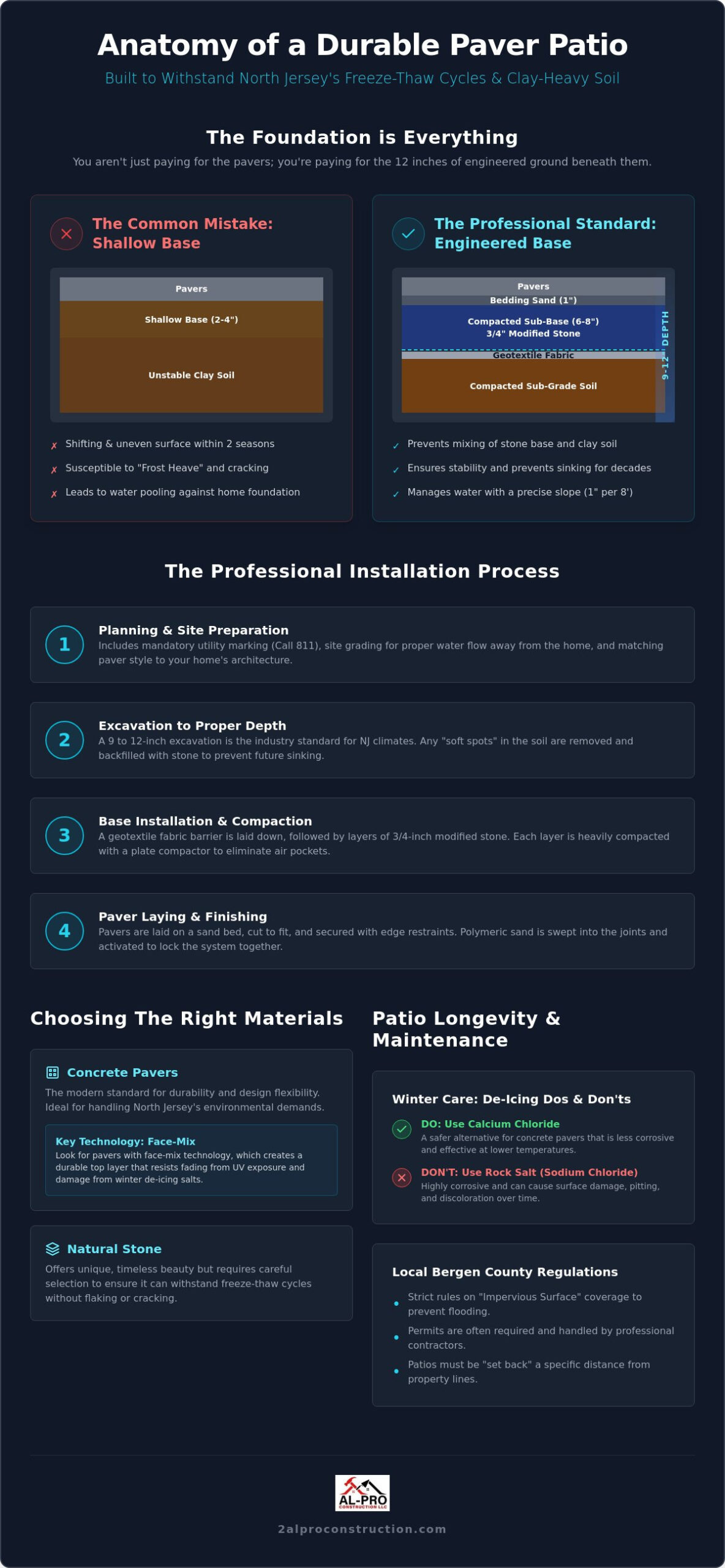
Many homeowners wonder why a quote for a paver patio installation Bergen County project seems high when the materials are just stones. The reality is simple. You aren’t just paying for the pavers; you’re paying for the 12 inches of engineered ground beneath them. In North Jersey, our clay-heavy soil is notorious for holding moisture. When that moisture freezes in winter, it expands, creating “frost heave” that can easily pop unanchored stones out of place or cause unsightly cracking. The base is the most expensive and critical part of the job because it’s what prevents your investment from shifting after the first season.
To combat these environmental pressures, we use a multi-layered approach. First, we install a high-quality geotextile fabric. This heavy-duty material acts as a barrier that prevents your stone base from mixing with the soft clay soil. Without it, the gravel eventually disappears into the mud, leading to a wavy, unstable surface. We also establish a precise “pitch” or slope. A standard grade of 1 inch for every 8 feet ensures that heavy rainfall moves away from your home foundation rather than pooling against it. This technical precision is what separates a professional build from a DIY attempt.
Excavation Depth for NJ Climates
For a durable patio in towns like Ridgewood or Paramus, 9 to 12 inches of total excavation is the industry standard. This depth allows for a thick, compacted sub-base of 3/4-inch modified stone. We use heavy-duty vibrating plate compactors to eliminate air pockets in the sub-grade soil. If we encounter “soft spots” during excavation, we remove the unstable earth and backfill it with extra stone to prevent future sinking. Following strict ICPI installation standards is the only way to guarantee the structure won’t dip or settle over time.
Managing Drainage and Runoff
Surface slope is only part of the solution. For properties with significant runoff issues, we often integrate French drains or “pop-up” emitters directly into the patio design. These systems catch water at the source and move it to a safe discharge area. An Expert Masonry Contractor in Bergen County NJ knows how to hide these functional elements so they don’t disrupt the aesthetic of your stonework. Whether you choose a permeable system that lets water soak through the joints or a traditional non-permeable surface, managing the flow is non-negotiable. If you’re ready to start your project correctly, you can view our masonry service options to see how we handle site-specific drainage challenges.
Step-by-Step Professional Installation Process
A professional paver patio installation Bergen County project follows a disciplined sequence of events. Once the excavation and drainage work is complete, we begin the methodical buildup of the sub-base. We install 3/4-inch modified stone in 2 to 3 inch “lifts.” Each lift is thoroughly compacted using a heavy-duty vibrating plate compactor. This incremental approach ensures maximum density and prevents the base from settling unevenly over the years. It’s a labor-intensive process, but it’s the only way to guarantee a surface that doesn’t dip or sag.
After the base is rock-solid, we screed a 1-inch layer of bedding sand. This provides the perfectly level surface required for the pavers to sit flat. We then lay the pavers in your chosen pattern, maintaining tight joints and straight lines. To keep the entire structure from “spreading” or shifting outward into the lawn, we install professional-grade edge restraints around the perimeter. These restraints are anchored with heavy-duty spikes to lock the edges in place permanently, ensuring the patio maintains its shape through decades of use.
The Art of the “Click-Drop” Method
Placing the stones requires a specific technique known as the “click-drop” method. Instead of sliding a paver into place, which would disturb the smooth sand bed, we click the stone against the edge of the already-laid paver and drop it straight down. This maintains the integrity of the bedding layer. For custom curves or intricate borders, we use a wet saw to create clean, precise cuts. We also make it a point to “randomize” pavers from at least three different pallets simultaneously. This prevents “color blocking” and ensures a natural, consistent blend of tones across the entire surface of your paver patio installation Bergen County project.
Polymeric Sand and Final Compaction
The final stage involves more than just sweeping sand. We use polymeric sand, a specialized mix that hardens when activated by water, to lock the pavers together and prevent weed growth. After the initial sweep, we run a vibrating compactor over the surface again. This “final sweep” and vibration seat the pavers firmly into the sand bed and force the polymeric sand deep into the joints. Finally, we mist the surface with water. Proper activation is critical; too much water can wash the polymers away, while too little won’t create a solid bond. This methodical finish is the difference between a loose collection of stones and a unified, durable structure.
Choosing the Right Paver Materials for North Jersey
Selecting the right surface materials for a paver patio installation Bergen County project requires balancing your aesthetic preferences with the harsh realities of the North Jersey environment. You need a material that can withstand heavy snow, freeze-thaw cycles, and the corrosive effects of winter de-icing agents. High-quality concrete pavers, such as those from Cambridge or Techo-Bloc, are specifically engineered for these conditions. These manufacturers often utilize “ArmorTec” or similar face-mix technologies. This process concentrates high-strength materials and rich pigments on the top layer of the paver, ensuring the colors stay vibrant and the surface remains resistant to road salt and UV fading for decades.
While modern, smooth-finish pavers offer a clean look, many homeowners prefer “tumbled” pavers for their practical benefits. Tumbled stones have distressed edges and a textured surface that naturally hides minor wear, scratches, or small chips that might occur over time. This choice is particularly effective for high-traffic areas near grills or pool decks. To create a cohesive property design, you should coordinate your patio colors with existing Siding or Exterior Renovations. Using complementary earth tones or matching stone veneers on your home’s foundation can make the new patio feel like an original part of the architecture. Homeowners planning a full exterior refresh may also want to review their options for professional siding installation in Bergen County NJ, since coordinating your patio materials with new fiber cement or stone veneer siding creates a unified, high-value curb appeal.
Concrete Pavers vs. Natural Stone
Concrete pavers offer uniformity and interlocking strength, making them easier to install in complex patterns. They are engineered to high standards of durability and consistency. Natural stone, such as Bluestone or Travertine, provides a timeless, organic look that many find superior in terms of heat resistance; natural stone stays cooler under the summer sun. However, natural stone has variable thicknesses, which requires a more labor-intensive installation process to ensure a level surface. Compressive strength is the key metric for paver durability, representing the material’s ability to withstand heavy loads without cracking or crumbling under pressure.
Selecting Patterns and Borders
The layout pattern you choose affects both the visual appeal and the structural integrity of the surface. Herringbone is widely considered the strongest pattern for weight distribution because the interlocking angles prevent the stones from shifting under pressure. Ashlar and Running Bond patterns are also popular in Bergen County for their traditional and clean appearances. You can define the patio’s edge by using “Soldier Courses” or contrasting borders that use a different color or texture than the main field. If your backyard already features a Wood or Composite Deck, choosing a paver color that provides a subtle contrast can create a beautiful multi-level entertaining space. If you’re ready to select your materials, contact our masonry experts to discuss the best options for your specific property.
Maintaining Your Patio for Longevity and Curb Appeal
A durable paver patio installation Bergen County project doesn’t end when the last stone is laid. To protect the structural integrity of your investment, you must follow a consistent maintenance routine. Spring is the ideal time for a deep clean. If you choose to power wash your pavers, you must be careful. Using too much pressure or angling the nozzle directly into the joints can blow out the polymeric sand we discussed in the installation phase. This creates voids where water can collect and weeds can grow. Instead, use a wide-angle tip and keep the wand at a consistent distance from the surface to preserve the jointing material.
Winter care is even more critical in North Jersey. You should strictly avoid using traditional rock salt, also known as sodium chloride, on your pavers. Rock salt is corrosive and can cause the surface of your stones to flake or pit over time. We recommend using calcium chloride instead. It’s safer for the concrete and stone materials while remaining effective at melting ice in sub-zero temperatures. You should also plan for a re-sanding schedule every 3 to 5 years. Topping off the joints ensures the interlocking system remains tight and prevents individual stones from shifting under foot traffic.
Sealing your patio is another option to consider for long-term protection. You can choose between a “wet look” sealant, which deepens the color and adds a slight sheen, or a “natural” sealant that provides protection without changing the appearance. Sealants help resist oil stains from grills and prevent UV fading, but they do require reapplication every few years to remain effective.
Protecting Against NJ Freeze-Thaw Cycles
Our local climate puts immense pressure on hardscapes. You should inspect your patio every spring for signs of “heaving.” If you notice a stone has lifted significantly, it’s often a sign that the base drainage system is compromised or that water is pooling beneath the surface. The same freeze-thaw forces that damage patio foundations can also wreak havoc on your home’s masonry — if you spot cracking or spalling on your fireplace structure during your spring inspection, it’s worth reviewing a guide to chimney repair Bergen County NJ homeowners need before the next winter season. For snow removal, always use a shovel or plow with a plastic or rubber edge. Metal blades can scratch the face of the pavers, especially on modern, smooth-finished styles. Keeping your perimeter drains and gutters clear of autumn leaves is also essential. When water can’t exit the area quickly, it saturates the base and increases the risk of frost damage during the next cold snap.
Why Professional Execution Matters
The difference between a patio that lasts five years and one that lasts twenty is found in the methods used during the initial build. At Al-Pro Construction LLC, we follow a “15-year rule.” We focus on structural techniques, such as deep-base compaction and advanced drainage, that ensure your outdoor space remains level for decades. We take pride in maintaining a clean job site and providing reliable project management to reduce your stress during the renovation. A well-executed paver patio installation Bergen County homeowners can enjoy shouldn’t require constant repairs. It should provide peace of mind and lasting value for your property. If you’re ready to transform your backyard with a build that stands the test of time, you can Get a professional paver patio estimate from Al-Pro Construction LLC today.
Invest in a Foundation That Lasts
A successful paver patio installation Bergen County project is an investment in the structural integrity of your property. We have explored how proper planning, a deep stone base, and methodical installation prevent the shifting and sinking common in North Jersey. By choosing high-quality materials and following a disciplined maintenance routine, you ensure your outdoor living space remains a functional asset for decades. The goal is always to create a surface that is as stable as it is beautiful.
With over 15 years of local masonry experience, Al-Pro Construction LLC specializes in the high-durability drainage and base systems required for our regional climate. As a fully licensed and insured New Jersey General Contractor, we handle every phase of the project with precision and transparency. We believe that your property deserves a foundation that stands firm against time and the elements. You can trust that our master craftsmen will treat your backyard with the care and order it requires.
Request Your Free Bergen County Patio Consultation
You deserve the peace of mind that comes from professional execution. We look forward to partnering with you to build an outdoor space that combines orderly engineering with lasting aesthetic appeal.
Common Questions About Paver Patios in North Jersey
How long does a paver patio installation typically take in Bergen County?
A standard paver patio installation Bergen County project typically takes between 5 and 10 business days to complete. This timeline includes the essential phases of excavation, base compaction, and the final setting of the stones. Larger projects involving multi-level designs or integrated drainage systems may require additional time. We prioritize a methodical pace to ensure every layer of the foundation is properly stabilized before moving to the next phase of the build.
Will my paver patio sink or shift during a New Jersey winter?
Your patio will not sink or shift if the foundation is engineered specifically for the local climate. We install a deep, compacted stone base to prevent moisture from pooling beneath the surface stones. This structural approach stops the frost heave that often occurs in North Jersey’s clay-heavy soil during the winter. When the base is rock-solid and properly drained, the pavers remain level through many freeze-thaw cycles without requiring repairs.
Do I need a permit for a paver patio in Oakland, NJ?
Yes, you generally need a zoning permit for a new patio in Oakland, NJ. Most Bergen County municipalities have strict limits on impervious surface coverage to manage stormwater runoff across the community. You must ensure your project doesn’t exceed the allowed percentage of hardscaping for your specific lot size. It’s best to check with your local building department to confirm current regulations and setback requirements before starting any excavation work.
What is the best type of sand to use between pavers?
Polymeric sand is the professional standard for filling the joints between your pavers. This material contains specialized polymers that harden when misted with water, creating a durable bond that resists weed growth and ant infestations. It’s much more effective than traditional play sand, which can wash away during heavy rainstorms. Using high-quality polymeric sand ensures your patio remains stable and maintains its clean, finished appearance for many years.
Can I install a paver patio over an existing concrete slab?
You can install pavers over an existing concrete slab if the concrete is structurally sound and not crumbling. This method involves drilling drainage holes to prevent water from becoming trapped between the layers and using a thin bedding layer for leveling. However, if the existing concrete is severely cracked or sinking, full removal is necessary. Building a new foundation from the ground up is often the more reliable choice for long-term stability.
How much maintenance does a paver patio require compared to a deck?
Paver patios require much less maintenance than wood or composite decks. You don’t have to deal with the regular staining, sanding, or wood rot that affects North Jersey decks over time. A patio only needs an occasional power wash and a sand top-off every few years to keep the joints full. This makes it a more durable and cost-effective option for homeowners who want a beautiful outdoor space without constant upkeep.
What is the difference between permeable pavers and standard pavers?
Permeable pavers feature wider joints and a specialized sub-base that allows water to filter directly into the ground through the stones. Standard pavers use a slight slope to direct water off the surface into a drain or the surrounding lawn. Permeable systems are a recognized best management practice for stormwater. They are particularly useful for properties that have reached their limit for traditional impervious surfaces under local Bergen County zoning rules.
How soon can I use my patio after the polymeric sand is installed?
You can typically walk on your patio 24 to 48 hours after the polymeric sand has been misted and allowed to cure. It’s important to keep the surface dry during this initial period to allow the polymers to set correctly. You should wait the full 48 hours before moving heavy furniture, fire pits, or grills back onto the stones. This patience ensures the joints are fully locked and won’t be disturbed by weight or movement.


