
Chimney Repair in Bergen County NJ: Myth-Busting and Restoration Guide for 2026
Is that hairline crack on your chimney crown just a minor blemish, or is it a warning sign that your fireplace is unsafe for the 2026 winter season? Many homeowners in our area feel a sense of dread when they spot masonry damage, worrying about the risk of fire or a total structural collapse. You’re right to be concerned. In our local climate, moisture trapped in small crevices expands during the freeze-thaw cycle, turning small gaps into major structural failures. Finding reliable chimney repair Bergen County NJ requires more than just a quick patch; it demands an understanding of how New Jersey’s weather impacts brick and mortar over time.
You deserve to know exactly which repairs are essential for safety and which are merely aesthetic. This guide will help you distinguish between surface wear and deep structural decay, ensuring you don’t overpay for unnecessary work or ignore a genuine hazard. We’ll explore the latest 2026 restoration standards, the importance of proper flashing and liners, and how to verify that your contractor meets the state’s strict new licensing and bonding requirements. By the end, you’ll have a clear plan to ensure your home stays dry and your fireplace remains a safe, functional centerpiece for your family.
Key Takeaways
- Identify how North Jersey’s specific climate cycles cause masonry expansion and why surface-level cracks often indicate deeper structural issues.
- Distinguish between repointing, which involves replacing mortar joints, and full rebuilding to determine the most cost-effective and durable solution for your property.
- Learn to recognize the warning signs of flue liner failure and interior leaks that could lead to fire hazards or carbon monoxide risks.
- Secure long-term peace of mind by understanding why specialized chimney repair Bergen County NJ is a technical masonry task that exceeds the scope of general home maintenance.
- Debunk common myths about cosmetic fixes and discover how professional project management ensures a clean, orderly restoration process.
Understanding Chimney Damage in Bergen County’s Climate
Bergen County homes face a relentless environmental assault that many homeowners overlook until interior damage appears. The local climate is defined by extreme temperature swings that compromise even the most robust masonry. While a chimney might look solid from the ground, the internal structure is often battling a process of slow decay. Professional chimney repair Bergen County NJ is frequently necessitated by the specific way North Jersey weather interacts with traditional building materials.
Beyond the temperature, the geography of the region plays a significant role. Soil in towns like Oakland and Ridgewood can be heavy with clay, leading to subtle shifts during periods of high saturation. These shifts put uneven pressure on the chimney’s foundation, causing hairline fractures that allow moisture to seep in. Additionally, the salt-heavy air moving inland from the coast accelerates the degradation of mortar joints, especially in older homes with original brickwork. Understanding the fundamentals of chimney construction helps identify why these environmental factors lead to such predictable patterns of damage.
The Impact of NJ Winters on Brick Integrity
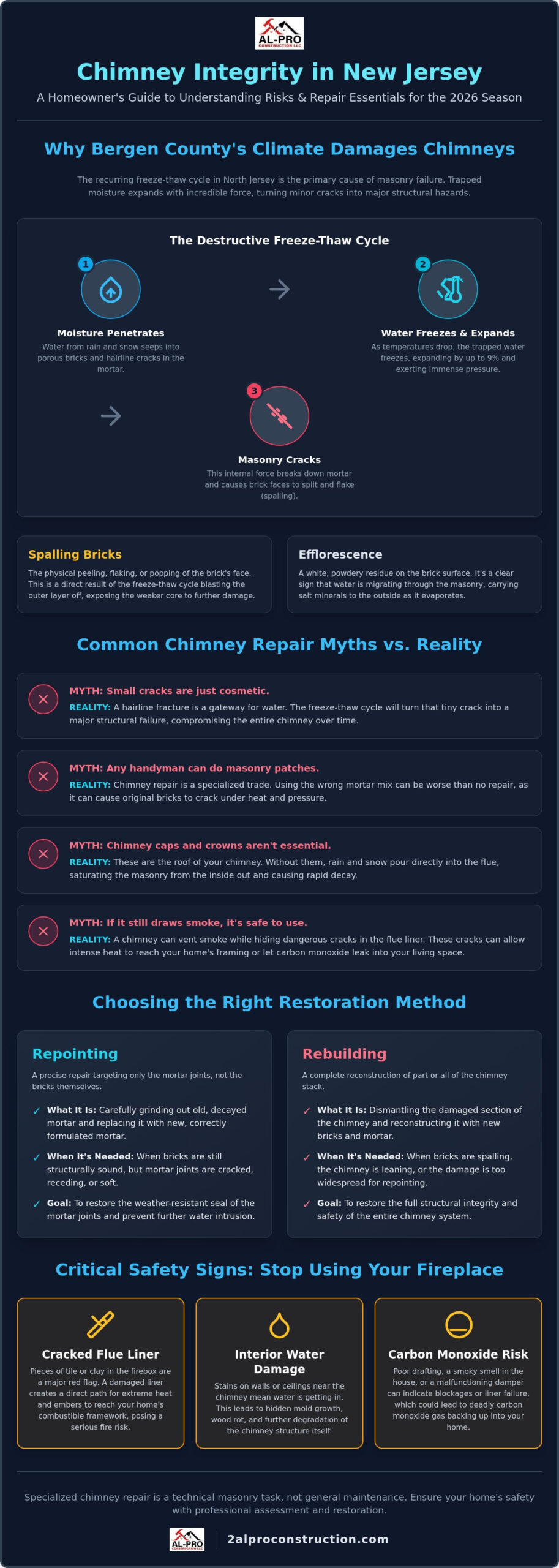
Porous bricks are particularly vulnerable during a typical New Jersey winter. When water enters these pores and freezes, it expands by roughly nine percent, forcing the masonry apart from the inside out. With Bergen County often experiencing 30 or more freeze-thaw cycles in a single season, this cumulative pressure is devastating. Thermal shock in masonry structures is the physical stress caused by rapid temperature fluctuations that force different layers of the brick to expand at varying rates. This stress eventually leads to deep cracks that compromise the entire stack.
Spalling and Efflorescence: More Than Just Stains
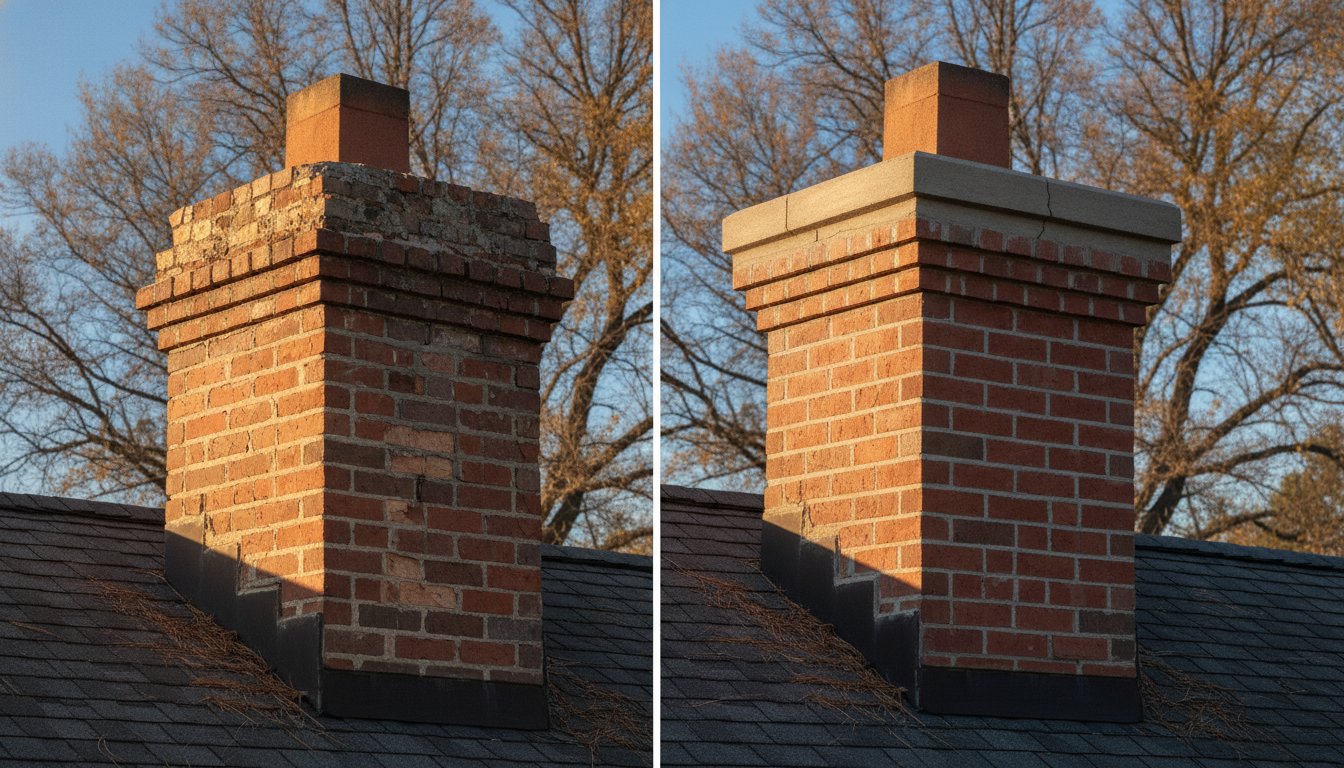
Homeowners often mistake spalling and efflorescence for simple aging. Spalling is the physical peeling or popping of the brick face, which occurs when trapped water freezes just beneath the surface and blasts the outer layer off. Efflorescence is the white, powdery substance that appears on the brickwork; it’s a clear sign of deep-seated moisture migration where water carries salt minerals to the surface. Ignoring these indicators is a mistake. What begins as a “surface” issue quickly transitions into structural failure, as the unprotected core of the brick is left exposed to the elements. Consistent maintenance is the only way to prevent a full rebuild.
Myth-Busting: 5 Common Misconceptions About Chimney Repair
Homeowners often delay essential maintenance based on common misunderstandings that circulate throughout the local community. These myths can lead to expensive structural failures that a proactive approach would have prevented. When it comes to chimney repair Bergen County NJ, relying on hearsay instead of professional masonry standards often results in temporary fixes that fail within a few seasons. Below are the five most frequent misconceptions we encounter in the field.
- Myth 1: Small cracks are only cosmetic. In reality, a hairline fracture is a direct path for water to enter the masonry. Once inside, that water follows the freeze-thaw cycle described previously, expanding and forcing the brick apart.
- Myth 2: Any handyman can fix a chimney. Chimney masonry is a specialized trade. Using the wrong mortar type or improper technique can cause the original bricks to crack under thermal pressure.
- Myth 3: Caps and crowns are optional. These components act as the roof of your system. Without them, water saturates the internal flue and the top courses of brick, leading to rapid decay.
- Myth 4: Waterproofing is a simple DIY task. Standard hardware store sealants often create a film that traps moisture inside the brick. Professional-grade water repellents must be vapor-permeable to allow the masonry to “breathe.”
- Myth 5: If it vents, it’s safe. A fireplace might still draw smoke while hiding dangerous cracks in the flue liner. The EPA’s Burn Wise program emphasizes that regular professional inspections are the only way to confirm a system is truly safe for use.
The Danger of “Quick Fix” Masonry Patches
Using generic mortar for a quick patch is one of the most common mistakes in North Jersey. Mortar must be softer than the surrounding brick to allow for natural expansion and contraction. If a contractor uses a high-strength Portland cement on older, softer bricks, the bricks themselves will eventually shatter because the mortar won’t give. Deep-joint mortar replacement, or repointing, is required to restore structural integrity. Surface caulking only hides the problem and often traps moisture, which accelerates the rot of the internal masonry. If you suspect your previous repairs were just surface-level, a professional evaluation of your brick and chimney repair needs can prevent a total collapse.
Why Chimney Crowns Are Your First Line of Defense
The chimney crown is a large slab that covers the top of the masonry stack. It’s often misunderstood as just a decorative concrete cap. A properly constructed crown must have a slope to shed water and a drip edge that extends beyond the chimney’s footprint. This prevents water from running down the face of the bricks. When a crown is built without these features, or when it’s made of thin mortar rather than reinforced masonry, it will crack and allow water to pour into the structure’s core. Maintaining this “roof” is the most cost-effective way to avoid a full chimney rebuild.
Comparing Chimney Restoration Methods: Repointing vs. Rebuilding
Deciding between repointing and a full rebuild is a critical step for anyone seeking chimney repair Bergen County NJ. While these terms are sometimes used interchangeably, they represent very different levels of masonry work. Repointing, or tuckpointing, is the methodical removal of decayed mortar joints and their replacement with fresh, compatible material. This is a maintenance procedure designed to restore the water-tight seal between bricks. Rebuilding, however, involves the physical removal and replacement of the bricks themselves, often necessitated when the masonry can no longer safely support its own weight.
A partial rebuild often represents a more prudent investment than repeated repointing on a failing structure. While the upfront cost is higher, rebuilding the top courses of brick—the area most battered by the local climate—eliminates the cycle of minor repairs. This approach ensures the structural integrity of the entire chimney for decades, providing a much higher long-term value than a temporary patch on compromised masonry.
When Tuckpointing is the Right Solution
This method is the appropriate choice when the bricks remain level, plumb, and structurally sound, but the mortar has begun to crumble or recede. Our process involves grinding out the old material to a precise depth, ensuring the new mortar bonds deeply with the existing masonry. We match the new mortar’s strength to the original brick to prevent the thermal expansion issues described in earlier sections. A professional repointing project typically has a 25-year lifespan, providing a durable barrier against the moisture infiltration that drives North Jersey masonry decay.
Signs Your Chimney Needs a Structural Rebuild
Structural failure is evident when the chimney begins to lean or develops large vertical cracks that travel through the bricks themselves. These issues often stem from foundation shifts or the cumulative effect of the thermal shock mentioned previously. During high-wind NJ storms, a leaning chimney is a significant liability that can cause catastrophic damage to the roof. The team at Al-Pro Construction LLC assesses the bond between the masonry and the flue liner to determine if a rebuild is necessary to ensure the structure remains a safe, stable component of your home.
Critical Safety Signs: When to Stop Using Your Fireplace
A fireplace is a source of comfort, but it can quickly become a liability if the structural components fail. Recognizing the signs that your system is compromised is essential for protecting your family from fire hazards and carbon monoxide exposure. If you observe any of the following indicators, it’s time to cease fireplace use until you can secure a professional evaluation for chimney repair Bergen County NJ. Ignoring these warnings can lead to expensive interior damage and safety risks that are far more costly than a standard maintenance visit.
The flue liner is your primary defense against house fires. It’s designed to contain heat and toxic gases, venting them safely out of the home. When a liner cracks or deteriorates, heat can transfer to combustible framing members within your walls. Carbon monoxide can also seep through masonry gaps into your living spaces. A cracked chimney crown is equally urgent; it acts as a primary entry point for water that will eventually destroy the liner and the masonry stack from the inside out. If the stack appears to be pulling away from the house, you require immediate chimney repair Bergen County NJ to prevent a total structural collapse.
You can perform a basic safety check from the ground using binoculars. Look for missing mortar, leaning stacks, or visible gaps at the top of the masonry. Check for bricks that look like they are “melting” or losing their outer face. These visual cues are often the first outward signs of a system that is failing internally. Taking a few minutes to inspect your property from the yard can save you thousands in emergency reconstruction costs later.
Interior Warning Signs You Shouldn’t Ignore
Water stains on the ceiling around the fireplace or in the attic are often the first sign of a failing crown or flashing. You might also notice bits of red brick or sandy mortar collecting in the firebox area; this indicates the masonry is shaling or disintegrating. A persistent smoky smell when the fireplace isn’t in use suggests that the draft is compromised or that creosote is leaching through a damaged liner. These symptoms indicate that the moisture issues we discussed earlier have already breached the exterior of your home.
The Importance of Flashing and Seal Integrity
Flashing is the metal transition that seals the gap between your roof and the chimney stack. It’s a common failure point that homeowners often mistake for a simple roof leak. Proper flashing ensures that water is diverted away from the vulnerable joint where the masonry meets the wood structure of your home. This protection works in tandem with other exterior systems, such as siding installation Bergen County NJ, to maintain a completely weather-tight envelope. If you’ve noticed dampness in your attic near the masonry, schedule a professional masonry inspection to identify the source before the damage spreads to your interior ceilings.
Professional Masonry Solutions with Al-Pro Construction LLC
Selecting a reliable partner for chimney repair Bergen County NJ requires finding a team that understands the specific building materials and environmental demands of the region. Al-Pro Construction LLC brings over 15 years of specialized experience to every masonry project we undertake. Based in Oakland, New Jersey, we have spent more than a decade observing how different brick types and mortar compositions react to the local climate. This regional familiarity allows us to provide restorations that aren’t just temporary fixes, but durable solutions designed for long-term stability.
Our work as a masonry contractor Bergen County NJ involves a deep commitment to the physical integrity of your entire home. We don’t view a chimney as an isolated stack; we see it as an integral part of your home’s exterior envelope. This holistic perspective ensures that our repairs integrate seamlessly with your existing siding, roofing, and foundation. We prioritize clear communication and orderly project management, ensuring you feel that your property is in capable, experienced hands from the initial assessment to the final site cleanup.
Our Methodical Approach to Chimney Restoration
Precision is the hallmark of a master craftsman, and Al-Pro Construction LLC follows a disciplined step-by-step process for every restoration. We begin with a thorough assessment where we evaluate the health of both the brick units and the mortar joints. We don’t believe in generic solutions; instead, we select materials that match the historical or aesthetic look of your home while meeting modern performance standards. Once the structural work is complete, we apply professional-grade waterproofing. This final step is essential to ensure the repair lasts for decades by preventing the moisture migration issues discussed in previous sections. We take pride in maintaining a clean job site, protecting your landscaping and roof throughout the duration of the work.
Ready to Secure Your Home for the 2026 Season?
Al-Pro Construction LLC serves homeowners throughout the region, including Oakland, Franklin Lakes, Wyckoff, and all of Bergen County. As the 2026 winter season approaches, ensuring your fireplace is safe and functional should be a top priority for any property owner. A well-executed masonry project provides more than just an aesthetic transformation; it offers the peace of mind that comes from knowing your home is structurally sound. Don’t wait for a minor leak to become a major structural failure. Reach out to our team to discuss your project and see the difference that methodical, professional execution makes for your property.
Schedule your chimney inspection with Al-Pro Construction LLC today to ensure your masonry is ready for the years ahead.
Protecting Your Home’s Structural Integrity for the Years Ahead
Maintaining a safe fireplace requires a proactive approach to masonry care. By identifying the early warning signs of water infiltration and understanding the difference between cosmetic wear and structural decay, you can prevent the need for a full chimney rebuild. Professional restoration ensures your home survives the harsh North Jersey climate while maintaining its historical character and value. Moving forward with a clear understanding of these restoration methods allows you to make informed decisions that protect your family and your property investment.
Ensuring your chimney repair Bergen County NJ is handled by experts provides long-term peace of mind. Al-Pro Construction LLC brings over 15 years of local masonry experience to every project. As a licensed and insured New Jersey general contractor, we specialize in durable brick and stonework that stands the test of time. Our methodical process prioritizes the safety of your family and the physical integrity of your property, ensuring every joint and brick meets professional standards. Before hiring any contractor for masonry work in the area, reviewing a comprehensive checklist for finding a reliable masonry contractor in Oakland NJ can help you verify licensing, bonding, and the 2026 compliance requirements that protect your investment.
Get a Professional Chimney Repair Estimate from Al-Pro Construction LLC to secure your home for the upcoming 2026 season. We look forward to helping you maintain a safe, functional, and beautiful fireplace for years to come.
Frequently Asked Questions
Is chimney repair covered by my NJ homeowners insurance?
Homeowners insurance in New Jersey typically covers chimney damage caused by sudden, accidental events such as lightning strikes, chimney fires, or fallen trees. It generally doesn’t cover repairs necessitated by age, lack of maintenance, or standard environmental wear. You should review your specific policy or contact your agent to determine if a structural failure qualifies for a claim based on the cause of damage.
How much does chimney repointing typically cost in Bergen County?
The cost of repointing depends on the chimney’s height, the accessibility of the stack, and the total volume of mortar that requires replacement. Every project is unique, so we provide detailed estimates after a physical assessment of the masonry’s condition. Investing in professional repointing early is a cost-effective way to prevent the significantly higher expenses associated with a full structural rebuild.
Can I use my fireplace if I see small cracks in the exterior brick?
You should stop using your fireplace until a professional examines any visible cracks to ensure the system is venting safely. Even small fissures in the exterior brick can indicate that moisture has reached the flue liner, which may lead to dangerous heat transfer or carbon monoxide leaks. A thorough inspection for chimney repair Bergen County NJ can confirm if the damage is aesthetic or a structural hazard.
What is the best time of year to schedule chimney masonry work in NJ?
The best time to schedule masonry restoration is between late spring and early autumn when temperatures stay consistently above freezing. Mortar requires specific thermal conditions to cure correctly and reach its full structural strength. Scheduling your project during the warmer months ensures that the materials bond properly before the harsh North Jersey freeze-thaw cycles begin in the winter.
How long does a typical chimney rebuild take to complete?
A typical chimney restoration or partial rebuild generally takes between three and seven days to finish. This timeline varies based on the height of the stack, the complexity of the brickwork, and current weather conditions. Our team follows a methodical schedule to ensure each stage of the masonry process is executed with the precision required for long-term durability and safety.
What is the difference between a chimney sweep and a masonry repair expert?
A chimney sweep specializes in cleaning soot and creosote from the flue to prevent fires, while a masonry repair expert focuses on the structural integrity of the brick, mortar, and foundation. If your chimney shows signs of crumbling joints, loose bricks, or a cracked crown, you need a masonry professional. Both services are necessary to maintain a safe and efficient fireplace system.
Do I need a permit for chimney repair in Bergen County?
Permit requirements depend on your specific municipality and the scope of the work being performed. Structural rebuilds and flue liner replacements often require a local building permit, while minor maintenance like repointing may not in some towns. It’s best to check with your local building department in Oakland or Franklin Lakes to ensure your project complies with all current New Jersey codes.
How often should a brick chimney be waterproofed?
Professional-grade waterproofing treatments should typically be reapplied every five to ten years depending on the chimney’s exposure to the elements. High-quality, vapor-permeable sealants allow the masonry to breathe while preventing liquid water from soaking into the brick pores. Regular waterproofing is a vital part of chimney repair Bergen County NJ that helps prevent the spalling and cracking caused by our local climate.


