
Patio Builder Bergen County NJ: Comparing Materials for Your 2026 Outdoor Project
The longevity of your outdoor living space is determined by what lies beneath the surface, not just the stones on top. In our local climate, the material you don’t see is what truly dictates whether your investment survives the freeze-thaw cycle or begins to sink after a single season. Partnering with an experienced patio builder Bergen County NJ ensures that your project prioritizes structural integrity over simple aesthetics.
It’s natural to feel concerned about shifting pavers or the complex drainage requirements found in towns like Oakland and Ridgewood. You want a beautiful space that increases your property value without creating a maintenance burden. This article explains the critical differences between modern patio materials and the technical construction methods required for the North Jersey landscape. We’ll examine how proper base preparation and adherence to local impervious coverage limits help you achieve a durable, orderly, and high-quality outdoor retreat for 2026.
Key Takeaways
- Compare the long-term maintenance of concrete pavers against the timeless weathering of natural flagstone to find the best fit for your lifestyle.
- Master the technical requirements for drainage and base compaction that protect your masonry from the destructive North Jersey winter.
- Plan a layout that maximizes your property’s topography, ensuring a functional transition from your interior rooms to your new outdoor living area.
- Learn how a professional patio builder Bergen County NJ manages complex site logistics to maintain an orderly workspace and a structurally sound installation.
- Gain insight into local zoning and impervious surface regulations to ensure your project remains compliant with municipal codes in towns like Paramus or Wyckoff.
Designing Your Bergen County Patio for the 2026 Season
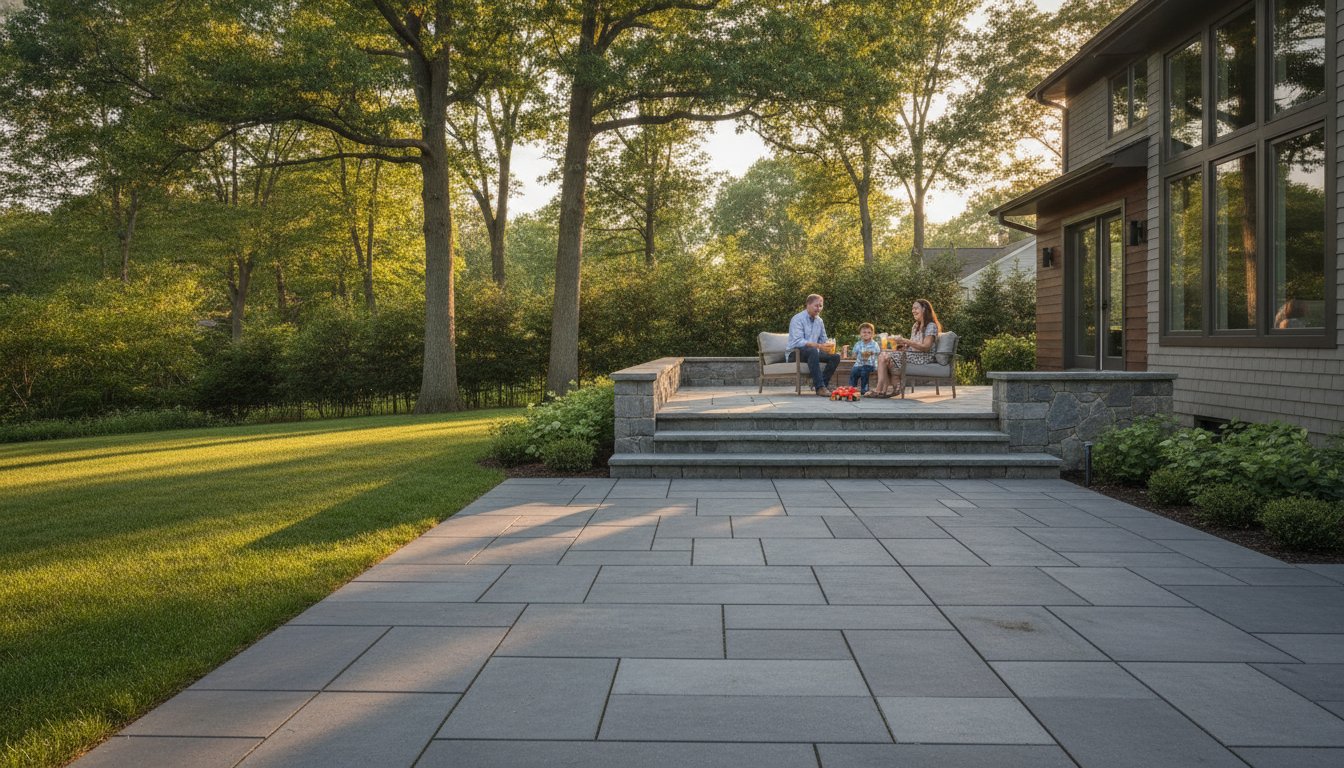
In 2026, the outdoor room concept has evolved from a simple trend into a standard for high-end home renovations. Homeowners now view their backyards as essential living space rather than just a patch of grass. This shift requires a methodical approach to design that prioritizes both flow and function. Working with a qualified patio builder Bergen County NJ allows you to translate these interior comforts to the exterior while ensuring the structural work meets local standards. A well-executed design doesn’t just add square footage; it creates a durable environment for year-round enjoyment.
Your property’s physical layout dictates the engineering requirements of the project. Flat lots in Paramus often allow for expansive, single-level designs that focus on broad social spaces. In contrast, the sloped yards frequently found in Oakland or Mahwah require sophisticated masonry and stonework. These properties often need tiered retaining walls to create usable level ground. A professional assessment identifies these challenges early, preventing the drainage issues and soil erosion that often plague amateur installations.
Aesthetic cohesion is achieved when the masonry style complements your home’s existing architecture. Whether your property is a classic Colonial or a sleek modern build, the materials should feel like an original part of the landscape. Planning for this level of detail takes time. Homeowners should ideally begin the design and permitting phase during the winter months. New Jersey permit queues can be weeks deep by the time spring arrives, and starting early is the only way to ensure your project is ready for the peak summer season.
Defining Your Patio’s Primary Function
Layouts change significantly based on whether you prioritize large-scale entertaining or private relaxation. We recommend zoning the space to accommodate multiple uses without a cluttered appearance. A dedicated area for dining can be separated from a lounge zone by a change in masonry patterns or a built-in fire pit. Integrating an outdoor kitchen into the initial plan ensures that gas and water lines are correctly positioned before any paver or stone is laid, avoiding costly revisions later.
Local Permit and Zoning Considerations
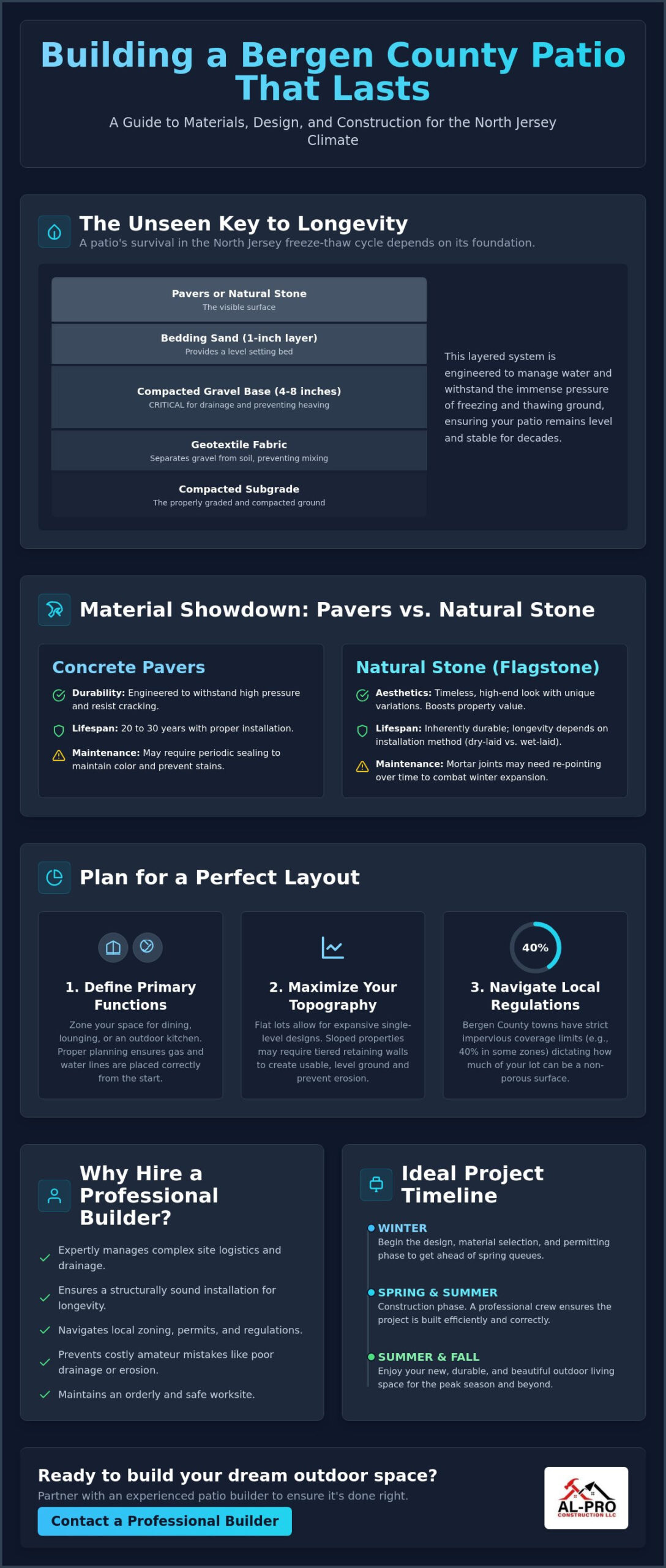
Bergen County municipalities enforce strict impervious coverage limits that dictate how much of your lot can be covered by non-porous surfaces. For instance, the Borough of Bergenfield limits this to 40% in R-15 zones, while Wyckoff’s limits vary based on total lot size. A professional site plan is essential for navigating these regulations. It must account for property line setbacks and the location of septic systems to ensure a smooth approval process with your local zoning office. This step is vital for protecting your property value and ensuring long-term compliance.
Pavers vs. Natural Stone: Choosing the Best Material for NJ Patios
Selecting between manufactured pavers and natural stone is a decision that balances long-term structural performance with aesthetic preference. In North Jersey, this choice is complicated by a climate that swings from humid summers to sub-zero winters. A knowledgeable patio builder Bergen County NJ will tell you that both materials have distinct advantages, but their success depends entirely on the installation method. The material you choose must be able to handle the pressure of the freeze-thaw cycle without losing its level or visual appeal.
Concrete pavers offer exceptional durability and a lifespan of 20 to 30 years when installed over a properly compacted base. These units are engineered to withstand high pressure and resist the cracking often seen in poured concrete. Natural flagstone, particularly Pennsylvania Bluestone, provides a timeless, high-end look that many Bergen County homeowners prefer for its prestige and resale value. While stone is inherently durable, its longevity in our region depends on whether it is laid “dry” on a gravel bed or “wet” on a concrete slab with mortar joints. Each method has specific drainage requirements that must be addressed during the design phase.
Maintenance requirements differ significantly between the two. Pavers often require periodic sealing to maintain their color and protect against oil stains or salt damage. Natural stone requires less chemical maintenance but may need occasional re-pointing of mortar joints if they succumb to winter expansion. For safety, thermal-finish bluestone provides excellent slip resistance even when wet, making it a reliable choice for families. Conversely, some darker pavers can retain significant heat in July. This is a factor to consider if you plan on walking barefoot across the surface during peak summer months. If you are also evaluating elevated outdoor structures for your property, consulting a deck builder Bergen County NJ can help you compare how wood and composite materials perform against pavers in our local climate.
The Case for Concrete Pavers
Concrete pavers provide a level of uniformity that simplifies both the initial installation and future repairs. If a single unit is stained or cracked, it can be removed and replaced without disturbing the surrounding area. Modern interlocking technology creates a flexible pavement system that moves with the ground rather than fighting against it. This flexibility is a primary reason why many homeowners choose paver patio installation for its predictable performance and wide variety of textures that mimic natural slate or clay.
The Elegance of Natural Stone and Bluestone
Pennsylvania Bluestone remains a staple in regional masonry because it complements the traditional architecture found throughout North Jersey. Whether you choose a thermal finish for a smooth surface or irregular flagstone for a rustic appearance, every stone is unique. When properly mortared by a skilled craftsman, natural stone creates a rigid, permanent structure that feels like a natural extension of the landscape. This material often commands a higher price point but offers a distinct aesthetic that manufactured products struggle to replicate perfectly.
NJ Winter Resilience: Solving Drainage and Freeze-Thaw Issues
The freeze-thaw cycle in North Jersey represents the single greatest threat to the longevity of your masonry. As ground temperatures fluctuate, moisture trapped in the soil expands and contracts, exerting immense pressure on your patio’s surface. Without a properly engineered foundation, this movement causes pavers to heave and mortared joints to crack. A seasoned patio builder Bergen County NJ prioritizes the structural layers beneath the stone to ensure the installation remains level for decades. Stability starts with a sub-base of 2A modified stone, which must be compacted in specific lifts to create a solid, non-shifting platform.
Proper grading is equally critical for protecting your investment and your home’s structural integrity. Water must be actively directed away from your foundation to prevent basement seepage and soil erosion. We analyze the existing topography of your yard to determine where runoff will naturally collect; this allows us to implement a strategic pitch that keeps the surface dry. Managing this water flow is a technical process that requires precision tools and a deep understanding of local soil conditions.
Advanced Drainage Solutions for Paver Patios
In areas with heavy clay soil or low-lying spots, surface pitch alone might not be enough. We often integrate French drains and catch basins into the masonry plan to redirect heavy rainfall toward lower elevations or municipal storm systems. Permeable pavers offer another modern solution for managing groundwater on-site, as they allow rain to filter through the joints and back into the earth. A standard installation requires a 1-inch pitch per 10 feet of surface area to ensure water moves effectively toward drainage zones rather than pooling.
Preventing Masonry Heaving and Cracking
The finishing details of a project often dictate its long-term resilience. We use high-quality polymeric sand in paver joints to create a flexible yet firm bond that resists weed growth and prevents water from washing away the bedding sand. For vertical elements like sitting walls or outdoor kitchens, reinforced concrete footings are necessary to support the weight and resist frost heave. If you are considering different structural options for your backyard, you can also check out our guide on the best decking material for New Jersey climate to see how various materials perform in our local environment.
Building for the North Jersey climate isn’t just about choosing a beautiful stone; it’s about disciplined execution. By focusing on compaction, pitch, and high-quality joint materials, we provide homeowners with peace of mind. You won’t have to worry about your patio shifting after the first hard frost or dealing with standing water near your back door. A methodical approach to drainage ensures that your outdoor space remains a valuable, maintenance-free asset to your property. If you have an existing deck adjacent to your new patio, reviewing our deck repair north Jersey safety checklist can help you identify any structural vulnerabilities caused by the same freeze-thaw cycles before they compromise your family’s safety.
Planning the Perfect Layout for Your North Jersey Property
Designing a functional layout requires more than just selecting a spot in the yard. It involves a spatial logic that accounts for how you and your guests will move through the space. As a seasoned patio builder Bergen County NJ, we prioritize creating a blueprint that balances open social areas with dedicated zones for specific activities. A dining area for six people typically requires a minimum footprint of 12 feet by 12 feet to allow chairs to slide out without hitting the edge of the masonry. Lounge areas centered around a fire pit often need a 14-foot diameter to maintain a safe and comfortable distance from the heat source.
Sloped lots, which are common in communities like Oakland or Franklin Lakes, present an opportunity for multi-level designs. Instead of a single flat surface, we use retaining walls to create tiered “outdoor rooms.” This approach manages the grade of your property while providing distinct levels for cooking, dining, and relaxation. These structural elements must be integrated into the initial site plan to ensure the stone or paver patio installation is both aesthetically pleasing and structurally sound. Proper planning at this stage prevents the “cluttered” look that occurs when features are added as afterthoughts.
Lighting and landscaping serve as the final layer of a professional installation. Low-voltage LED lighting integrated into sitting walls or stair treads increases safety after sunset and highlights the texture of the stonework. We recommend selecting native plants that thrive in the North Jersey climate to soften the hard edges of the masonry. This creates a finished look that feels like a permanent part of your home’s exterior rather than a separate addition.
The Importance of Traffic Patterns
Clear pathways are essential for a usable outdoor space. We design layouts with a primary “artery” that connects the back door to the grill and seating zones. These walkways should be at least 3 to 4 feet wide to allow two people to pass comfortably. By defining these routes early, we avoid creating “dead zones,” which are areas of masonry that serve no specific purpose and eventually become wasted space. Balancing these open thoroughfares with cozy, intimate corners ensures the patio feels inviting whether you are hosting a large group or enjoying a quiet evening.
Integrating Masonry with Other Exterior Features
Your patio should be a visual extension of your home’s interior and exterior finishes. We often match the tones of the stonework to existing siding or stucco to create a cohesive look. Coordinating your patio colors with your kitchen remodeling Bergen County NJ interior aesthetic creates a unified living environment that flows naturally through your sliding doors. If you plan for future additions like a pergola or a covered porch, we can install the necessary footings during the initial masonry phase to save time and money later.
Why Hire a Professional Patio Builder in Bergen County?
Distinguishing between a general landscaper and a specialized masonry contractor is essential for the long-term success of your project. While many firms offer surface-level stone placement, a professional patio builder Bergen County NJ prioritizes the complex engineering required for a permanent structure. Masonry work involves much more than aesthetics; it requires technical knowledge of soil load-bearing capacities and the specific hydraulic pressures found in North Jersey. Selecting a dedicated expert ensures your outdoor space withstands the elements without the common issues of settling or cracking.
Effective project management is the hallmark of a disciplined contractor. We maintain an orderly job site to minimize the impact on your daily routine, ensuring that materials are stored safely and debris is cleared at the end of every workday. This focus on cleanliness is not just about appearance. It reflects a methodical approach where every measurement is verified and every stone is placed with intent. A structured workspace leads to a more precise installation, providing you with a finished product that meets the highest professional standards.
Verification of credentials provides the ultimate peace of mind for any homeowner. A reputable contractor must be fully licensed and insured in the state of New Jersey to protect your property and investment. We encourage you to review local portfolios and speak with references in communities like Ridgewood or Wyckoff. Seeing completed work in our specific regional climate serves as tangible evidence that the builder understands local zoning requirements and the physical demands of the freeze-thaw cycle.
Expert Craftsmanship and Reliability
The team at Al-Pro Construction LLC approaches every project with a focus on precision and structural stability. With more than 15 years of experience in the local area, we’ve developed a deep familiarity with the unique soil conditions that affect masonry in Bergen County. Our process involves rigorous excavation and systematic base preparation to prevent the sinking that often plagues amateur work. We prioritize these unseen layers because they’re the only way to guarantee a patio remains level for decades.
Ready to Transform Your Backyard?
Your journey toward a durable outdoor living space begins with a thorough site evaluation. We provide a detailed proposal that explains the scope of work, material specifications, and a clear construction timeline. During the build, you can expect transparent communication and a project manager who oversees every technical detail. This structured process removes the anxiety of home improvement, leaving you with a well-executed space ready for the 2026 season. Contact us today to schedule your consultation and receive a professional assessment of your property.
Build Your 2026 Outdoor Sanctuary with Confidence
A successful outdoor project requires a balance between design vision and technical discipline. You now understand how the right material choice and a meticulously prepared base protect your investment from the North Jersey climate. By prioritizing drainage and adhering to local zoning limits, you ensure your space remains a functional, compliant asset to your property. Choosing a specialized patio builder Bergen County NJ is the final step in translating these plans into a durable reality that enhances your home’s value.
Al-Pro Construction LLC provides the expert guidance and methodical execution needed for high-end masonry work. With over 15 years of local experience, we operate as a licensed and insured home improvement contractor dedicated to structural integrity. Our team specializes in the complex masonry and structural drainage systems that define a professional installation. We take pride in maintaining an orderly job site and delivering results that reflect the highest standards of craftsmanship in our community.
Request a Professional Patio Estimate from Al-Pro Construction LLC to begin your property’s transformation. We look forward to helping you create a permanent, high-quality outdoor retreat that your family will enjoy for years to come.
Frequently Asked Questions
Do I need a permit for a new paver patio in Bergen County?
Yes, most Bergen County municipalities require a zoning permit because of strict impervious surface regulations. Local codes in towns like Wyckoff or Bergenfield limit the percentage of your property that can be covered by non-porous materials. You should always check with your specific municipal building department before starting a project to ensure compliance with the New Jersey Uniform Construction Code.
How long does a typical patio installation take in North Jersey?
A standard patio installation typically takes between one and two weeks once the physical excavation begins. However, the entire timeline from design to completion often spans several months due to local permitting queues. We recommend starting the planning phase during the winter to ensure your project is scheduled and approved for the spring or summer season.
What is the best material for a low-maintenance patio?
Concrete pavers are generally considered the best material for a low-maintenance outdoor space. They are engineered to resist cracking and don’t require the frequent mortar repairs sometimes associated with natural stone. If a single paver is damaged or stained, it can be individually replaced without disturbing the rest of the installation.
Can you build a patio over an existing concrete slab?
Building a patio over an existing concrete slab is possible but requires a thorough inspection of the slab’s structural integrity. If the underlying concrete is cracked or settling, those issues will eventually transfer to the new surface. There are also significant concerns regarding door thresholds and drainage that must be addressed by an experienced patio builder Bergen County NJ.
How do I prevent weeds from growing between my patio pavers?
Using high-quality polymeric sand in the joints is the most effective way to prevent weed growth between pavers. This specialized sand hardens when activated with water, creating a durable barrier that resists seeds and prevents water from washing away the bedding layer. Regular sweeping and occasional re-sanding help maintain this protective seal over time.
Should I choose pavers or natural stone for my backyard?
The choice between pavers and natural stone depends on your aesthetic preference and your goals for property resale value. Pavers offer a uniform look and excellent durability in the North Jersey climate. Natural stone, such as Pennsylvania Bluestone, provides a unique, high-end finish that many homeowners prefer, though it requires more precise masonry skills during the installation process.
What happens if my patio starts to sink or shift after a winter?
Shifting or sinking is usually a sign of an insufficient base or poor drainage management. If this occurs after a winter, the affected area must be lifted so the underlying stone base can be re-compacted and leveled. Hiring a qualified patio builder Bergen County NJ ensures that the initial excavation and 2A modified stone base are deep enough to resist the local freeze-thaw cycle.
How much does a patio installation cost in Bergen County?
Total project costs are influenced by your choice of materials, the complexity of the site’s topography, and the specific drainage requirements of your property. Natural stone installations typically require more labor-intensive masonry work than manufactured pavers. We recommend receiving a detailed, on-site proposal to understand the specific investment required for your unique landscape and local zoning needs.


2 Comments
Best Decking Material for New Jersey Climate: A 2026 Homeowner’s Guide
June 28, 2026[…] a complete outdoor retreat that includes both a deck and a patio, working with an experienced patio builder Bergen County NJ ensures your materials and base preparation are properly matched to our local freeze-thaw […]
Deck Builder Bergen County NJ: Comparing Wood vs. Composite for 2026
June 28, 2026[…] of the landing. For those considering a comprehensive exterior renovation, consulting a specialized patio builder Bergen County NJ can help in selecting materials that survive the local freeze-thaw cycles while complementing your […]