

Bathroom Remodeling: The Definitive 2026 Homeowner’s Reference Guide
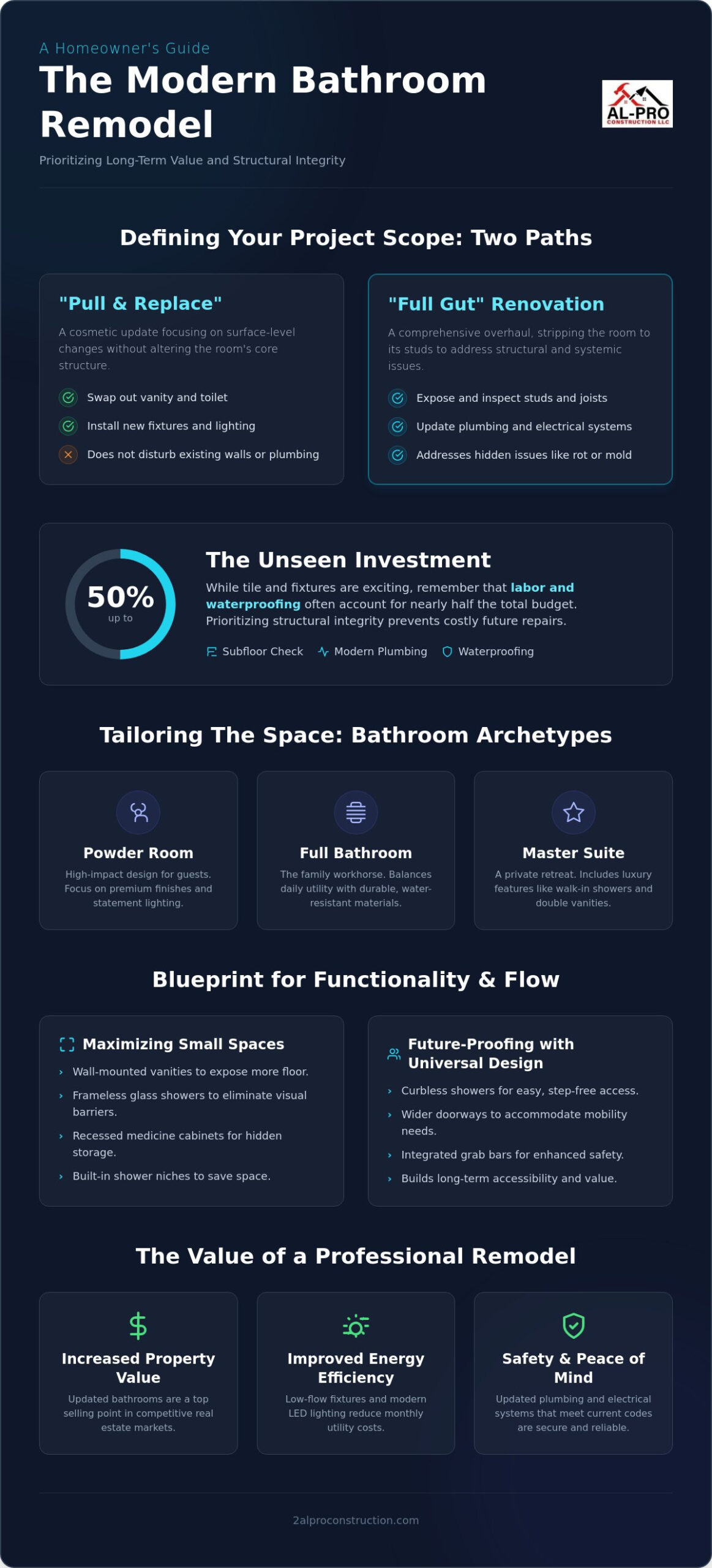
Most homeowners start their bathroom remodeling project by picking out tile, yet labor and waterproofing often account for nearly 50% of the total budget. It’s a sobering statistic that highlights why structural integrity must always come before aesthetics. If you’re feeling anxious about hidden water damage or overwhelmed by the sheer volume of fixtures available in 2026, you aren’t alone. It’s natural to worry about finding a reliable contractor in North Jersey who respects your home and your timeline.
You deserve a bathroom that functions as well as it looks, without the stress of unexpected costs or poor craftsmanship. This guide offers a comprehensive look at planning and executing a renovation that prioritizes long-term value. We’ll examine which materials offer the best return on investment, how to integrate 2026 trends like warm minimalism and smart technology, and what you need to know about local building codes. By the end, you’ll have the confidence to manage your project with precision and achieve a result that stands the test of time.
Key Takeaways
- Differentiate between a cosmetic “pull and replace” and a full gut renovation to establish a realistic project scope and budget.
- Understand the importance of inspecting subfloors and joists to prevent future expenses related to structural sagging or hidden water damage.
- Select durable materials such as porcelain or natural stone that offer the best return on investment and long-term moisture resistance.
- Streamline your bathroom remodeling process by assessing functional daily needs against the physical constraints of your current plumbing layout.
- Gain clarity on the professional construction timeline and the critical role of local Bergen County permits in maintaining property standards.
Defining the Scope of Your Bathroom Remodeling Project
Successful bathroom remodeling is a systematic process that upgrades fixtures, layout, and structural components. It isn’t just about aesthetics. For a foundational understanding of how these projects fit into broader property maintenance, you can review this home improvement overview. A professional renovation ensures that every layer of the room, from the joists to the grout, is built to last.
Homeowners must choose between a “pull and replace” update and a “full gut” renovation. A pull and replace is a cosmetic shift where we swap out the vanity and toilet without disturbing the walls. A full gut renovation involves stripping the room to the studs. In North Jersey, we frequently recommend the latter. Many older homes in the area suffer from aging galvanized pipes or subfloor rot that only becomes visible once the old tile is removed. Addressing these hidden issues prevents costly repairs later. For a deeper look at how these challenges play out in real projects, our bathroom renovation North Jersey planning guide provides inspiring examples and practical insight specific to our regional architecture.
While the square footage is smaller than other rooms, these projects often match the logistical complexity of kitchen remodeling Bergen County NJ. The density of plumbing, electrical, and waterproofing work required in a small area demands precise project management. Every inch must be utilized effectively to ensure the space remains functional and compliant with local codes.
Types of Bathroom Remodels
Powder rooms focus on high-impact design for guest areas. Since these are high-traffic spaces, we prioritize premium finishes and statement lighting. Full bathrooms serve as the workhorses of the home. We balance daily utility with durable, water-resistant materials that can withstand heavy family use. Master suites are designed as private retreats. These projects often include luxury features like curbless walk-in showers, double vanities, and high-end tile work to create a spa-like atmosphere.
The Value of a Professional Remodel
Investing in a professional bathroom remodeling project offers tangible returns. In the competitive Bergen County real estate market, updated bathrooms significantly increase property resale value. Modern renovations also improve energy efficiency. By installing low-flow fixtures and LED lighting, you reduce monthly utility costs while maintaining high performance. Beyond the financial gains, updated plumbing and electrical systems that meet 2026 safety codes provide essential peace of mind. You can rest easy knowing the infrastructure behind your walls is stable and secure.
Essential Planning and Layout Considerations
Effective bathroom remodeling begins with a thorough functional assessment. You must determine who will use the space daily before choosing a single fixture. A master suite requires a flow that supports a morning routine for two, while a hallway bath needs to prioritize durability for children or guests. Evaluating these needs early prevents layout mistakes that are difficult to correct once construction starts.
Evaluate your existing footprint carefully. Moving plumbing stacks or load-bearing walls adds significant technical complexity and cost to the project. We often find that optimizing the current layout provides better long-term value than a total reconfiguration. If you’re planning to stay in your home for the next decade, consider Universal Design. Features like curbless showers, integrated grab bars, and wider doorways ensure the space remains accessible as your needs change. It’s a proactive way to build value into your property.
Storage is another critical factor, especially in North Jersey homes where square footage is often limited. We recommend integrated solutions that don’t crowd the floor. Recessed medicine cabinets and built-in shower niches provide necessary storage without encroaching on your movement. If you’re struggling to visualize how to maximize your current space, reviewing our previous projects can help you see the potential in your own home.
Maximizing Small Bathroom Spaces
Wall-mounted vanities and toilets are excellent tools for making a small room feel expansive. By exposing more of the floor tile, you create a sense of continuous space. We also suggest using frameless glass shower enclosures. They eliminate the visual barrier of a shower curtain or thick metal frame, allowing the eye to travel to the back wall. These small adjustments transform a cramped environment into a functional, open room.
Layout Best Practices
Proper clearance is essential for both comfort and safety. According to the International Residential Code (IRC), you need at least 21 inches of clear space in front of toilets, sinks, and tubs. A toilet also requires a minimum of 15 inches from its centerline to any adjacent wall or obstruction. Ventilation is equally important. A mechanical exhaust fan with a minimum of 50 CFM (cubic feet per minute) is necessary to prevent long-term moisture and mold issues. This methodical approach to layout mirrors the discipline required for basement finishing Bergen County NJ, where every inch of the floor plan must be utilized with precision.
The Critical Role of Structural Integrity and Waterproofing
The most important phase of bathroom remodeling occurs before a single tile is laid. While showroom displays focus on finishes, the longevity of your renovation depends entirely on what’s behind the walls. We begin every project by stripping the space to its skeleton to inspect the subfloors and joists. In older North Jersey homes, it’s common to find structural sagging or slow leaks that have compromised the wood over decades. Replacing damaged timber and leveling the floor is a non-negotiable step for ensuring a stable foundation.
Modern waterproofing has evolved beyond simple plastic liners. We utilize advanced systems like liquid-applied membranes and waterproof backer boards to create a continuous, impenetrable barrier against moisture. These materials prevent water from seeping into the wall cavity, which is the primary cause of mold growth and structural rot. If your bathroom features exterior-facing stone or brick walls, the expertise of a professional masonry contractor Bergen County NJ becomes essential. Properly managing the intersection between old-world masonry and new plumbing prevents moisture from wicking through the porous stone and damaging your interior finishes.
Plumbing and Electrical Standards
Reliability requires modern materials. We replace outdated cast iron or galvanized piping with durable PEX or copper to ensure consistent water pressure and eliminate the risk of corrosion. Your electrical system must also keep pace with 2026 technology. We install dedicated circuits for high-draw appliances like radiant heated floors or steam showers. Every installation we perform meets current NJ state building codes. This ensures your home passes inspections and remains safe for your family.
The “Al-Pro” Method: Cleanliness and Precision
Precision is our standard. A clean job site is vital for more than just appearances; it prevents fine construction dust from migrating into your living areas. We use methodical execution to ensure every tile and fixture is perfectly level and plumb. This attention to detail prevents spalling or the hairline cracking often seen in rushed renovations where the substrate wasn’t properly prepared. By prioritizing structural competence, we deliver a bathroom remodeling project that maintains its integrity and value for years to come.
Material Selection: Balancing Aesthetics with Durability
Selecting materials for bathroom remodeling requires a balance between visual appeal and physical resilience. In North Jersey, the high-humidity environment demands products that don’t warp, rot, or degrade when exposed to constant moisture. Every choice you make, from the vanity to the grout, must contribute to the long-term stability of the room. We treat this selection process with the same level of technical scrutiny as a second story addition Bergen County, ensuring that material weight and moisture resistance are perfectly aligned with your home’s structure.
Porcelain and natural stone are the primary choices for flooring and wet areas. Large-format tiles are highly recommended because they minimize grout lines. Fewer grout lines mean fewer areas where mold can accumulate and less maintenance for the homeowner. Safety is equally important. We look for tiles with a high Dynamic Coefficient of Friction (DCOF) rating to ensure the surface remains slip-resistant when wet. Accent tiles or mosaics can be used to add personal character without compromising the structural seal of the shower or floor.
Countertop selection follows similar logic. Quartz has become the preferred choice for 2026 because it is non-porous and requires no sealing. Granite offers a natural, heat-resistant surface but needs periodic maintenance to prevent staining. Marble is aesthetically unmatched but remains susceptible to etching from acidic cleaners and soaps. You must weigh the visual elegance of natural stone against the practical demands of your daily routine. If you are ready to select high-performance materials for your home, contact us to discuss your project specifications.
Flooring and Wall Tile
Large-format tiles create a clean, modern look while offering functional benefits. By reducing the number of joints, you create a more cohesive surface that is easier to keep sanitary. We also prioritize slip-resistance. A DCOF rating of 0.42 or higher is the industry standard for level interior spaces expected to be walked upon when wet. Using these technical benchmarks ensures your bathroom remains safe for every member of the family.
Fixtures and Cabinetry
Fixtures and cabinetry are the finishing touches that determine daily comfort. Avoid cheap particle board vanities that swell and warp in humid air. We prioritize solid wood cabinetry with moisture-resistant finishes. For fixtures, we select faucets and showerheads equipped with ceramic disc valves. These components are far superior to standard rubber washers; they provide a tighter seal and ensure drip-free performance for the life of the bathroom. Smart technology is also becoming a standard feature. Touchless faucets, integrated bidet toilets, and digital shower controls provide both convenience and improved hygiene.
Navigating the Remodeling Process with a Professional Contractor
A successful bathroom remodeling project requires more than just skilled labor; it demands disciplined project management. The process begins with a clear timeline that respects your daily routine. Typically, the pre-construction phase, which includes planning and material procurement, takes 2 to 4 weeks. Once demolition starts, the construction phase can last between 3 and 8 weeks depending on the complexity of the structural work. We coordinate every trade systematically to ensure that plumbers, electricians, and tile setters arrive in the correct order, preventing the project from stalling.
Minimizing disruption is a core priority for Al-Pro Construction LLC. We understand that your home remains a living space during construction. Our team utilizes physical barriers and HEPA filtration to manage dust migration. We also establish clear communication channels so you know exactly which phase of the project is occurring each day. This methodical approach provides peace of mind and ensures the job site remains orderly from demolition to the final coat of paint.
When evaluating a general contractor for your project, use this checklist to ensure they meet professional standards:
- Licensing and Insurance: Confirm they hold a valid New Jersey Home Improvement Contractor license and carry comprehensive liability insurance.
- Local Expertise: Ask for references from recent projects within your specific Bergen County municipality.
- Detailed Proposals: Ensure the contract includes a line-item breakdown of labor, materials, and the expected timeline.
- Site Protection: Verify their specific process for protecting your floors and managing construction debris.
Permits and Regulations in North Jersey
Local building departments in North Jersey are thorough, and for good reason. Permits are required for most bathroom remodeling tasks, including any changes to plumbing stacks, new electrical circuits, or structural modifications. A professional contractor handles the submission of these plans to ensure they meet 2026 safety codes. Attempting to bypass the permit process is a significant risk. Unpermitted work can lead to heavy municipal fines, issues with your homeowner’s insurance, and major delays or price reductions when you eventually decide to sell your home. Our 2026 bathroom renovation North Jersey guide covers current permit requirements and return on investment benchmarks to help you plan with confidence.
The Final Walkthrough and Warranty
The final inspection is your opportunity to verify that every detail meets our professional standards. During the walkthrough, we examine the consistency of the grout lines, the application of caulking around fixtures, and the operation of all shut-off valves. We look for perfect alignment in the tile work and ensure that all electrical components, such as smart mirrors or heated floors, are functioning correctly. We stand behind our craftsmanship with a written warranty, providing you with long-term confidence in the structural integrity of your new space.
Ready for a professional assessment? Contact Al-Pro Construction LLC for a consultation.
Securing Your Investment with Professional Craftsmanship
A successful bathroom remodeling project is an investment in both your daily comfort and the structural foundation of your property. By prioritizing moisture management and selecting resilient materials like porcelain or quartz, you ensure your renovation remains a high-value asset for years to come. We’ve explored the necessity of addressing hidden subfloor issues and navigating the specific building codes found throughout Bergen County. These methodical steps are essential for a result that is as stable as it is beautiful.
Al-Pro Construction LLC brings over 15 years of experience as a licensed and insured NJ General Contractor to every project. We specialize in the structural challenges of older home renovations and maintain a strict standard for clean job site management. Our team is ready to guide you through an orderly renovation process that values precision and long-term durability. We take pride in building spaces that stand the test of time.
Schedule Your Bergen County Bathroom Consultation with Al-Pro Construction LLC.
Your home is in capable hands, and we look forward to helping you achieve a professional result you can rely on.
Frequently Asked Questions
How much does a typical bathroom remodel cost in Bergen County?
Project costs vary based on the scope of work and the quality of materials selected for the space. A full gut renovation that addresses structural issues will require a different budget than a cosmetic update. Factors such as moving plumbing stacks or upgrading electrical circuits to meet 2026 safety codes also influence the final investment. We recommend homeowners maintain a contingency fund of 15% to 25% to cover unforeseen repairs common in older North Jersey properties. For a detailed breakdown of what to expect, our 2026 North Jersey guide on how much it will cost to add a bathroom provides a realistic, line-by-line overview of pricing factors specific to Bergen County.
How long will my bathroom be out of commission during a remodel?
The construction phase of a bathroom remodeling project typically lasts between 3 and 8 weeks. This timeline follows a pre-construction period of 2 to 4 weeks dedicated to planning and ordering materials. The total duration depends on the complexity of the structural work and the necessary curing times for waterproofing systems and tile mortar. We provide a methodical schedule to ensure the project moves forward without unnecessary delays.
Do I need to move out of my house during the renovation?
You don’t need to vacate your home if you have access to another functioning bathroom. Our team uses physical dust barriers and HEPA filtration to isolate the work zone and protect your indoor air quality. If the project involves the only bathroom in the house, you’ll need to make alternative living arrangements for the duration of the construction. We prioritize a clean job site to minimize the disruption to your daily life.
Is a permit required for a bathroom remodel in New Jersey?
Yes, permits are required for any renovation that involves structural modifications or changes to the plumbing and electrical systems. These regulations ensure that all work meets the International Residential Code (IRC) and NJ state safety standards. We manage the permit process with your local building department to ensure the project is compliant. This professional oversight protects your property value and prevents issues during a future home resale.
What is the best way to maximize a small bathroom layout?
Maximizing a small layout involves using fixtures that create visual floor space and reduce physical clutter. We often install wall-mounted vanities and toilets to expose more of the tile, which makes the room feel larger. Frameless glass shower enclosures and recessed storage niches also provide essential functionality without encroaching on the limited square footage. These strategic choices transform a cramped area into a more open and usable environment.
Should I choose a walk-in shower or keep a bathtub for resale value?
Maintaining at least one bathtub in the home is usually best for resale value, as it appeals to families with small children. However, if your home has multiple bathrooms, converting a master bath into a large walk-in shower is a highly desirable upgrade in the 2026 market. High-end showers with curbless entries and bench seating often provide a superior daily experience and a strong return on investment for long-term homeowners.
How do I know if my bathroom has hidden water damage before starting?
Common indicators of hidden damage include spongy sections in the floor, persistent musty smells, or discolored grout and caulking. You might also see signs of moisture on the ceiling of the room directly below the bathroom. While these symptoms suggest an issue, the full extent of the damage is often only confirmed during demolition. We inspect every subfloor and joist once the room is stripped to ensure the new bathroom remodeling project sits on a stable foundation.


